
Top Stories
Hanford Nuclear Site Begins Urgent Waste Glassification Process

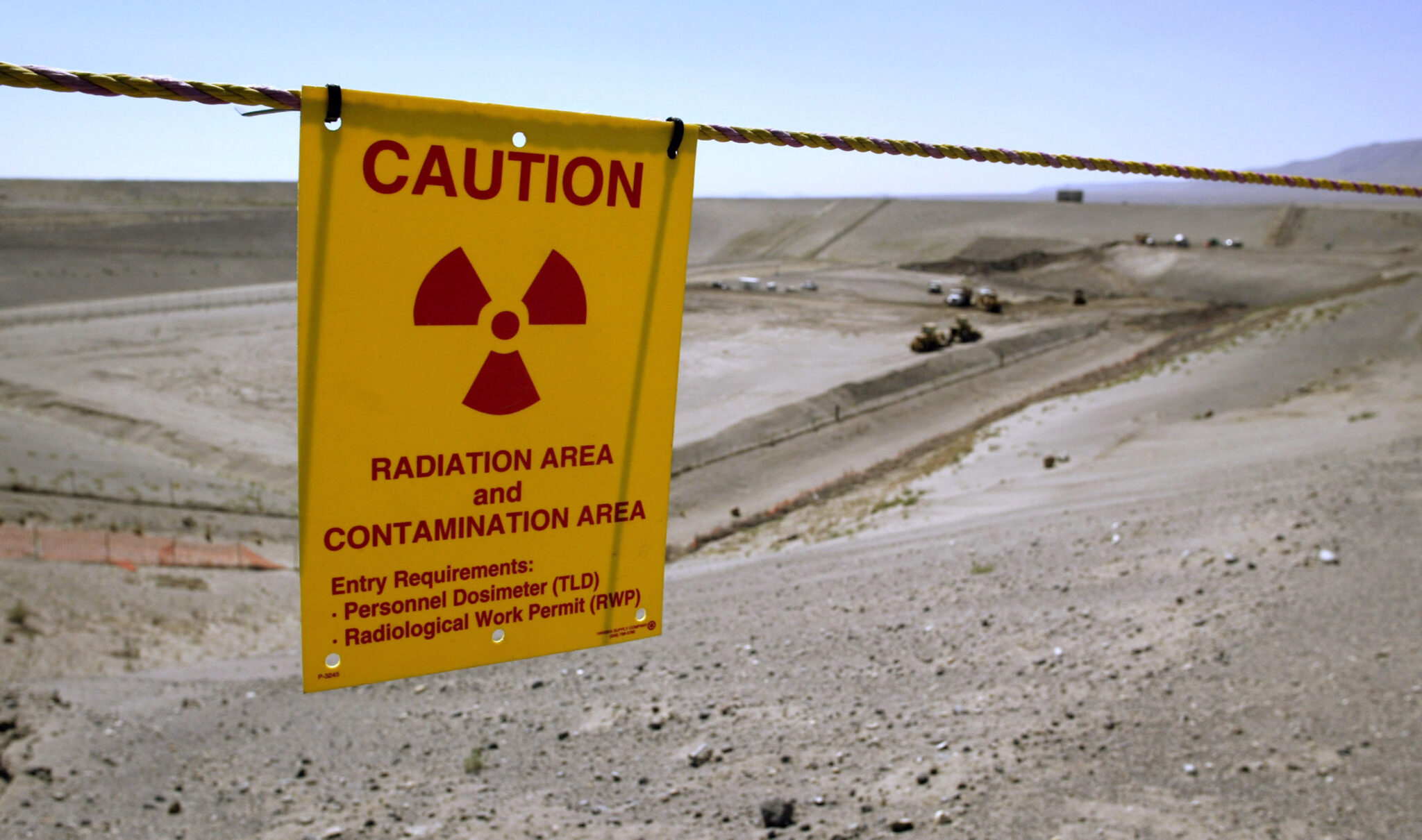
UPDATE: The Hanford nuclear reservation in south-central Washington has officially begun converting its most dangerous radioactive waste into safe glass. This landmark glassification process commenced on Saturday evening, but was only confirmed by the U.S. Department of Energy (DOE) on Wednesday.
This development marks a significant milestone for the world’s largest radioactive waste treatment facility. Ray Geimer, the DOE’s Hanford manager, stated, “The plant’s successful startup represents a crucial achievement at this scale, demonstrating the ability to stabilize nuclear waste for safe, long-term disposal.”
Lawmakers from Washington’s congressional delegation are celebrating this advance. Senator Patty Murray remarked, “This is just the start and we’ve still got a ways to go before we’re anywhere near done, but today’s success is worth celebrating — let’s make glass!” Meanwhile, Senator Maria Cantwell hailed it as an “incredible technical and logistical accomplishment.”
The glassification process is currently set to handle an initial batch of 25,000 gallons of waste, which will be treated in two massive melters. This technology combines radioactive waste with glass flakes, heating the mixture to temperatures of 2,100 degrees to create a stable glass that will be stored in large cylinders to cool and solidify.
This initiative is crucial for addressing the legacy of waste generated by Hanford’s operations since its establishment in 1943 for plutonium production. Over the decades, this work resulted in the creation of billions of gallons of hazardous waste, with approximately 56 million gallons stored in 177 underground tanks, a third of which are known to leak.
Alarmingly, it is estimated that at least 1 million gallons of radioactive liquid have seeped into the ground and contaminated an aquifer located 200 feet below the site, eventually reaching the Columbia River, roughly seven miles away.
The original timeline for the treatment plant was set for 2009, but it has taken an additional 16 years to reach this point. Hanford plans to gradually ramp up operations over the next year until the facility reaches full capacity. This first plant aims to process 40-50% of the low-activity waste stored in the tanks, with plans for two additional glassification plants for high-level waste.
The overall budget for this long-overdue project has ballooned from an initial $4 billion in 2002 to an estimated $30 billion today, with the first plant alone costing over $9 billion.
Despite this progress, the current legal target is to complete the glassification of all tank wastes by 2052. However, DOE has indicated an internal expectation to push this deadline back to 2069, as noted in a recent report by the Government Accountability Office.
As this process unfolds, the community and environmental advocates are closely monitoring developments. The successful implementation of this glassification process is not only a technical achievement but a crucial step toward ensuring the safety and health of local residents and ecosystems.
Authorities will continue to update the public on the progress of this vital project. For now, the focus remains on the immediate success of glassification and the future implications for waste management at Hanford.

Urgent Tax Savings Alert: Maximize Deductions Before April 15

Trump’s Administration Faces Uncertainty Over Government Shutdowns

Cosmic Defects: The Mystery of the Universe’s Missing Anomalies

Rapid City Parks Department Opens Registration for Bocce Leagues

Samsung Galaxy Watch 9 to Feature Larger 435mAh Battery Soon

Two Dead After Student Boats Capsize Off Okinawa Coast

Healthy Choice Wellness Reports Earnings with Mixed Results

Prince Harry Positions Himself as Royal Family’s Image Reviver

All Points North Lodge Achieves FSPHP-ETA Accreditation

Send Holiday Parcels for £1.99 with New Comparison Service

University of Hawaiʻi Leads $25M AI Project to Monitor Natural Disasters

Maui County Reopens Upgraded Lānaʻi Fifth Street Courts Today!

Daily Codeword Puzzle Launches on October 21, 2025

Congresswoman Under Fire for Misleading Epstein Donation Claims

Interstellar Object 3I/ATLAS Emits Unique Metal Alloy, Says Scientist

Trump Vows to Resolve Afghanistan-Pakistan Crisis “Very Quickly”

Charles Darwin’s Address Book Reveals Hidden Aspects of His Life

Rediscovering Chrysler: 5 Overlooked Models from the 1980s
-
 Lifestyle8 months ago
Send Holiday Parcels for £1.99 with New Comparison Service
-
Science9 months ago
University of Hawaiʻi Leads $25M AI Project to Monitor Natural Disasters
-
 Top Stories8 months ago
Maui County Reopens Upgraded Lānaʻi Fifth Street Courts Today!
-
 Entertainment10 months ago
Daily Codeword Puzzle Launches on October 21, 2025
-
 Lifestyle9 months ago
Congresswoman Under Fire for Misleading Epstein Donation Claims
-
 Science10 months ago
Interstellar Object 3I/ATLAS Emits Unique Metal Alloy, Says Scientist
-
 Top Stories9 months ago
Trump Vows to Resolve Afghanistan-Pakistan Crisis “Very Quickly”
-
 Science8 months ago
Charles Darwin’s Address Book Reveals Hidden Aspects of His Life
-
 Lifestyle8 months ago
Rediscovering Chrysler: 5 Overlooked Models from the 1980s
-
 Science7 months ago
Understanding Generation Z: Strategies for Engaging the Workforce
-

 Entertainment10 months ago
Kelly McCreary Discusses Future of Maggie and Winston in Grey’s Anatomy
-

 Entertainment7 months ago
Landmark Shift as Iconic Anime Series Concludes After 26 Years