
Science
Foundation Deploys Humanoid Robots in Ukraine for Reconnaissance

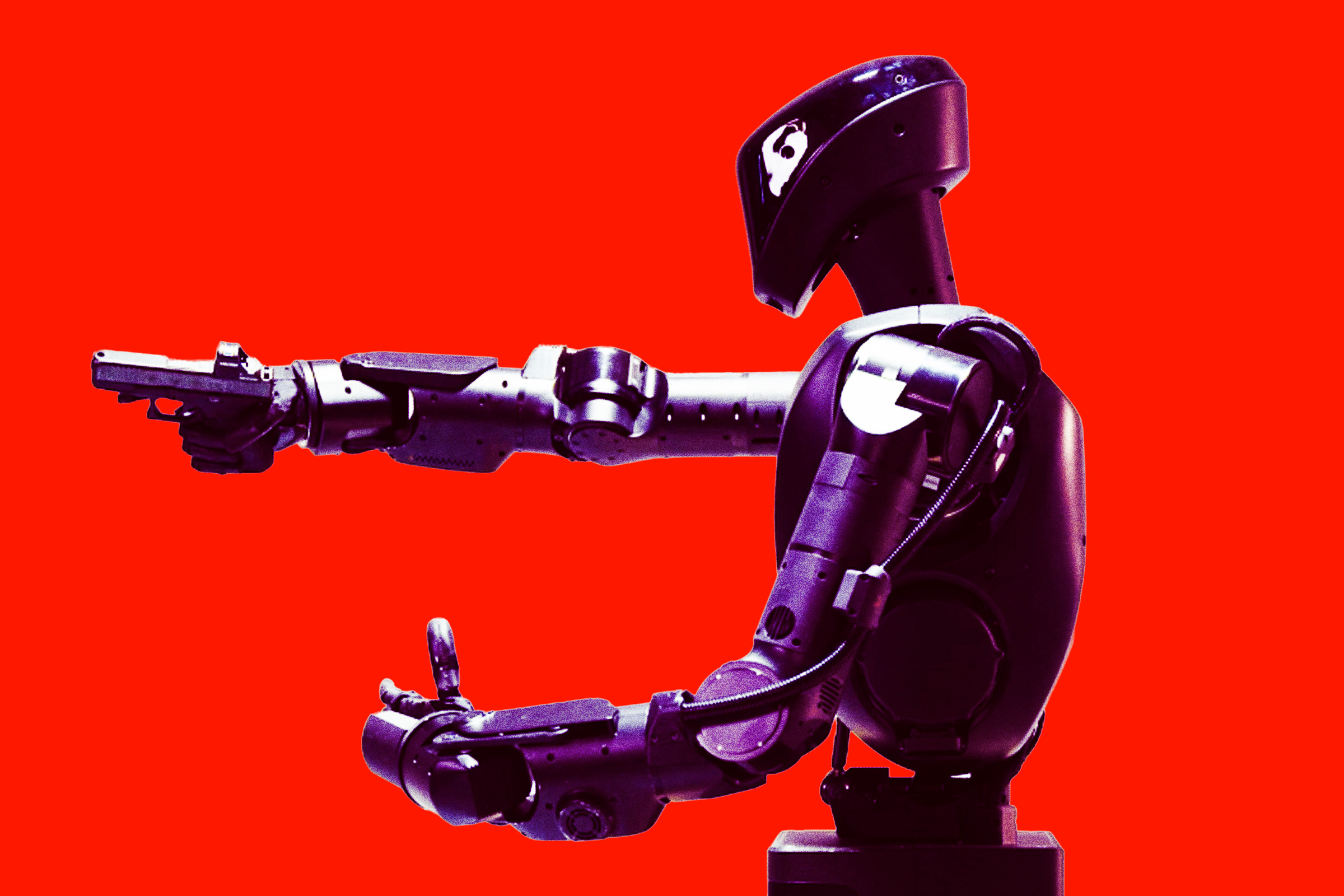
Humanoid robots have made their debut on the frontlines of the Ukraine-Russia conflict, marking a significant development in military technology. Foundation, a robotics company co-founded by combat veteran Mike LeBlanc, has sent two of its Phantom Mk-I units for frontline reconnaissance duties in Ukraine. This deployment, which occurred in February 2023, represents the first known use of humanoid robots in a combat environment, potentially setting a precedent for future military applications.
In an interview with Time magazine, LeBlanc emphasized the ethical considerations behind deploying robots in warfare. “We think there’s a moral imperative to put these robots into war instead of soldiers,” he stated. The long-term vision for the Phantom series includes the ability to operate various weaponry, similar to the fictional robots depicted in the “Terminator” films. Currently, the Phantom Mk-I is capable of wielding firearms such as revolvers, semi-automatic pistols, shotguns, and even a dummy M-16 rifle.
This move aligns with broader trends in military robotics. According to the Ukrainian state news agency United24, the country initiated 7,495 robotics operations in January 2023 alone. While many of these operations focus on logistics—such as the delivery of weapons, ammunition, and food to troops—others involve armed robots equipped with Kalashnikov machine guns and explosives. Dramatic footage has previously shown armed Ukrainian robots prompting Russian soldiers to surrender.
Russia, too, has embraced robotics on the battlefield, employing various drones and robotic systems. Nevertheless, they have yet to deploy humanoid robots like those being tested by Foundation. The eastern front of the Ukraine-Russia war has already seen significant use of non-humanoid robotic systems, making it a likely scenario for the future deployment of humanoid units.
Beyond the conflict in Ukraine, Foundation is exploring additional applications for its technology. The company is reportedly in “very close contact” with the Department of Homeland Security regarding potential patrol robots for the US-Mexico border, indicating that the use of humanoid robots could extend far beyond combat scenarios.
While the future of humanoid robots in warfare remains uncertain, the developments in Ukraine highlight a rapidly changing landscape in military technology. As robotics continue to evolve, the implications for both combat operations and ethical considerations will become increasingly significant.

Urgent Tax Savings Alert: Maximize Deductions Before April 15

Trump’s Administration Faces Uncertainty Over Government Shutdowns

Cosmic Defects: The Mystery of the Universe’s Missing Anomalies

Rapid City Parks Department Opens Registration for Bocce Leagues

Samsung Galaxy Watch 9 to Feature Larger 435mAh Battery Soon

Two Dead After Student Boats Capsize Off Okinawa Coast

Healthy Choice Wellness Reports Earnings with Mixed Results

Prince Harry Positions Himself as Royal Family’s Image Reviver

All Points North Lodge Achieves FSPHP-ETA Accreditation

Send Holiday Parcels for £1.99 with New Comparison Service

University of Hawaiʻi Leads $25M AI Project to Monitor Natural Disasters

Maui County Reopens Upgraded Lānaʻi Fifth Street Courts Today!

Daily Codeword Puzzle Launches on October 21, 2025

Congresswoman Under Fire for Misleading Epstein Donation Claims

Interstellar Object 3I/ATLAS Emits Unique Metal Alloy, Says Scientist

Trump Vows to Resolve Afghanistan-Pakistan Crisis “Very Quickly”

Charles Darwin’s Address Book Reveals Hidden Aspects of His Life

Rediscovering Chrysler: 5 Overlooked Models from the 1980s
-
 Lifestyle8 months ago
Send Holiday Parcels for £1.99 with New Comparison Service
-
Science9 months ago
University of Hawaiʻi Leads $25M AI Project to Monitor Natural Disasters
-
 Top Stories8 months ago
Maui County Reopens Upgraded Lānaʻi Fifth Street Courts Today!
-
 Entertainment9 months ago
Daily Codeword Puzzle Launches on October 21, 2025
-
 Lifestyle8 months ago
Congresswoman Under Fire for Misleading Epstein Donation Claims
-
 Science10 months ago
Interstellar Object 3I/ATLAS Emits Unique Metal Alloy, Says Scientist
-
 Top Stories9 months ago
Trump Vows to Resolve Afghanistan-Pakistan Crisis “Very Quickly”
-
 Science8 months ago
Charles Darwin’s Address Book Reveals Hidden Aspects of His Life
-
 Lifestyle8 months ago
Rediscovering Chrysler: 5 Overlooked Models from the 1980s
-

 Science7 months ago
Understanding Generation Z: Strategies for Engaging the Workforce
-

 Entertainment10 months ago
Kelly McCreary Discusses Future of Maggie and Winston in Grey’s Anatomy
-

 Entertainment7 months ago
Landmark Shift as Iconic Anime Series Concludes After 26 Years