
Science
Understanding Free Radicals: Harmful or Beneficial to Health?

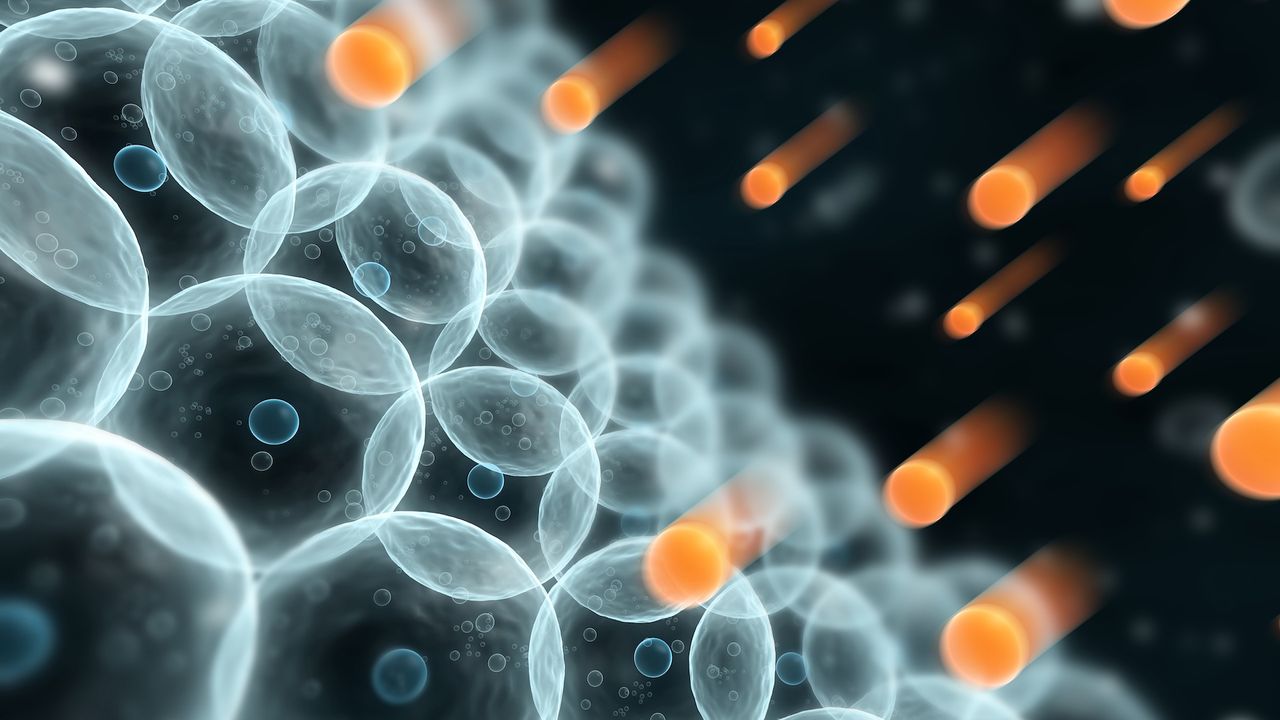
Free radicals are often viewed as harmful agents linked to serious health issues, including cancer and degenerative diseases. These unstable molecules, known scientifically as reactive oxygen species (ROS), are produced continuously by the body as part of vital processes such as respiration and cellular defense. While high levels of free radicals can indeed be damaging, recent research suggests that they may also have unrecognized benefits.
At their core, free radicals possess an unpaired electron, making them highly reactive. This reactivity can lead to significant cellular damage, as they seek out other electrons to stabilize themselves. According to Michael Murphy, a mitochondrial biologist at the University of Cambridge, this process can result in a harmful chain reaction. “If a radical rips away an electron, it leaves an unpaired electron behind, and that will react on further. So you often end up with a nasty chain reaction,” he explains.
Free Radicals: The Double-Edged Sword
The production of free radicals is not inherently negative. In fact, they play a crucial role in the immune system. The body uses these reactive species to attack pathogens and communicate between cells. For example, nitric oxide (NO), another single-electron species, serves as a signaling molecule essential for various cellular functions.
Around 90% of the free radicals in the human body are generated by mitochondria during the process of respiration. This process releases energy by breaking down glucose and oxygen through a complex series of reactions known as the electron transport chain. Although this chain is crucial for energy production, it also results in a small degree of free radical leakage. Murphy elaborates, “Electrons come off these enzymes and react with oxygen to form an oxygen free radical called superoxide.”
While free radicals are integral to cellular functions, they can become problematic when produced in excessive amounts. Environmental factors, such as ultraviolet (UV) exposure and high alcohol consumption, can elevate free radical levels. Murphy notes that UV light can interact with certain molecules, leading to the formation of even more reactive oxygen species. When free radicals exceed the body’s defense capacity, they can contribute to tissue damage and diseases, including cancer.
The Role of Antioxidants and Hormesis
Fortunately, the body has developed several defense mechanisms to combat the damaging effects of free radicals. A diet rich in antioxidants, such as vitamins C and E, can help neutralize these reactive particles. Additionally, specialized enzymes work to convert free radicals into less harmful compounds. The glutathione system, a sulfur-containing molecule, acts like a sponge, absorbing free radicals before being recycled by other enzymes.
Interestingly, research also indicates that controlled exposure to free radicals can be beneficial, a phenomenon known as hormesis. Michael Ristow, a longevity researcher at Charité University Medicine Berlin, explains, “The response to exposure to free radicals on a systemic level is typically increased response capacity against free radicals.” This means that moderate exposure can enhance the body’s ability to cope with various stressors, including toxic substances and UV radiation.
Exercise is a prime example of how controlled free radicals can bolster health. Ristow states, “If you take antioxidants before or together with exercise, the effect of exercise on health parameters is gone or massively reduced.” Thus, endurance, recovery, muscle gain, and insulin resistance can all be negatively impacted by excessive antioxidant consumption around workout times.
In summary, while free radicals are often labeled as harmful, their role in the body is complex and multi-faceted. The balance between their beneficial and damaging effects largely depends on their concentration and context. As Ristow points out, “If ROS really were only damaging, then evolution would have ruled them out!”
This article serves to inform readers about the nuanced role of free radicals in health, highlighting that their impact is not strictly negative. Understanding this balance is essential for making informed decisions about health and lifestyle.

Urgent Tax Savings Alert: Maximize Deductions Before April 15

Trump’s Administration Faces Uncertainty Over Government Shutdowns

Cosmic Defects: The Mystery of the Universe’s Missing Anomalies

Rapid City Parks Department Opens Registration for Bocce Leagues

Samsung Galaxy Watch 9 to Feature Larger 435mAh Battery Soon

Two Dead After Student Boats Capsize Off Okinawa Coast

Healthy Choice Wellness Reports Earnings with Mixed Results

Prince Harry Positions Himself as Royal Family’s Image Reviver

All Points North Lodge Achieves FSPHP-ETA Accreditation

Send Holiday Parcels for £1.99 with New Comparison Service

University of Hawaiʻi Leads $25M AI Project to Monitor Natural Disasters

Maui County Reopens Upgraded Lānaʻi Fifth Street Courts Today!

Daily Codeword Puzzle Launches on October 21, 2025

Congresswoman Under Fire for Misleading Epstein Donation Claims

Interstellar Object 3I/ATLAS Emits Unique Metal Alloy, Says Scientist

Trump Vows to Resolve Afghanistan-Pakistan Crisis “Very Quickly”

Charles Darwin’s Address Book Reveals Hidden Aspects of His Life

Rediscovering Chrysler: 5 Overlooked Models from the 1980s
-
 Lifestyle8 months ago
Send Holiday Parcels for £1.99 with New Comparison Service
-
Science9 months ago
University of Hawaiʻi Leads $25M AI Project to Monitor Natural Disasters
-
 Top Stories8 months ago
Maui County Reopens Upgraded Lānaʻi Fifth Street Courts Today!
-
 Entertainment10 months ago
Daily Codeword Puzzle Launches on October 21, 2025
-
 Lifestyle9 months ago
Congresswoman Under Fire for Misleading Epstein Donation Claims
-
 Science10 months ago
Interstellar Object 3I/ATLAS Emits Unique Metal Alloy, Says Scientist
-
 Top Stories9 months ago
Trump Vows to Resolve Afghanistan-Pakistan Crisis “Very Quickly”
-
 Science8 months ago
Charles Darwin’s Address Book Reveals Hidden Aspects of His Life
-
 Lifestyle8 months ago
Rediscovering Chrysler: 5 Overlooked Models from the 1980s
-

 Science7 months ago
Understanding Generation Z: Strategies for Engaging the Workforce
-

 Entertainment10 months ago
Kelly McCreary Discusses Future of Maggie and Winston in Grey’s Anatomy
-

 Top Stories8 months ago
aespa Faces Backlash Over G-Dragon Interaction at 2025 MAMAs