
Health
Indonesia Transforms Toll Roads into Emergency Runways for Jets

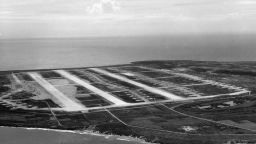
Indonesia is initiating a plan to convert toll roads into emergency runways for military jets, effectively creating multiple operational bases across its vast archipelago. The chief of staff of the Indonesian Air Force, Marshal Tonny Harjono, announced this development on Wednesday, indicating a goal for each of the country’s 39 provinces to have at least one section of toll road designated for emergency landings, although no specific timeline has been provided.
During a demonstration in Lampung province on the southern tip of Sumatra, an Indonesian Air Force F-16 fighter jet and a Super Tucano attack plane successfully took off and landed on a toll road. Deputy Defense Minister Donny Ermawan Taufanto remarked on this achievement, calling it a significant step towards enhancing Indonesia’s defense capabilities.
Using highways as military landing strips is not an entirely new practice. Countries like the United States, Finland, and Sweden have previously conducted similar operations. The Indonesian initiative reflects a broader strategy, as the U.S. military also explores dispersing fighter jets across various Pacific islands to reduce their vulnerability in potential conflicts, particularly concerning tensions with China.
While Indonesia has had ongoing disputes with China in the South China Sea, officials stress that this new plan is not aimed at any specific nation. The Indonesian Air Force stated, “The use of toll roads as situational alternative runways is expected to strengthen the operational readiness of the Indonesian Air Force in facing various potential threats, without reducing the primary function of toll roads as public transportation infrastructure.”
This strategy is viewed as a cost-effective solution for a country that spans over 3,100 miles (5,000 kilometers) and comprises more than 6,000 inhabited islands. Establishing a fleet of aircraft carriers to cover such vast territory would be both financially prohibitive and logistically challenging. Aircraft carriers can cost billions of dollars and require extensive maintenance.
Collin Koh, a research fellow at the S. Rajaratnam School of International Studies in Singapore, noted that the toll road strategy makes more strategic sense. “Having countless toll roads and highways earmarked as emergency military runways across the entire archipelago reduces risk compared to maintaining a single aircraft carrier,” Koh explained. “If you strike the aircraft carrier once, it’s gone; with multiple roads, the loss of one runway does not incapacitate the entire operation.”
The plan involves creating 3,000-meter-long (almost two miles) sections on toll roads for military aircraft landings and takeoffs. Harjono acknowledged the skill of Indonesian pilots, who are trained to navigate landings on roads that are only half as wide as conventional airport runways, which typically range from 45 to 60 meters. “Toll roads are only about 24 meters (79 feet) wide, narrower than airport runways. It’s risky, but Air Force pilots are trained for these conditions,” he stated, as reported by the government-run Antara news agency.
The ambitious project aims to enhance Indonesia’s military capabilities while maintaining the primary purpose of its toll roads. By integrating emergency runways into existing infrastructure, Indonesia positions itself to respond more effectively to various operational challenges in the region.

Urgent Tax Savings Alert: Maximize Deductions Before April 15

Trump’s Administration Faces Uncertainty Over Government Shutdowns

Cosmic Defects: The Mystery of the Universe’s Missing Anomalies

Rapid City Parks Department Opens Registration for Bocce Leagues

Samsung Galaxy Watch 9 to Feature Larger 435mAh Battery Soon

Two Dead After Student Boats Capsize Off Okinawa Coast

Healthy Choice Wellness Reports Earnings with Mixed Results

Prince Harry Positions Himself as Royal Family’s Image Reviver

All Points North Lodge Achieves FSPHP-ETA Accreditation

Send Holiday Parcels for £1.99 with New Comparison Service

University of Hawaiʻi Leads $25M AI Project to Monitor Natural Disasters

Maui County Reopens Upgraded Lānaʻi Fifth Street Courts Today!

Interstellar Object 3I/ATLAS Emits Unique Metal Alloy, Says Scientist

Kelly McCreary Discusses Future of Maggie and Winston in Grey’s Anatomy

Daily Codeword Puzzle Launches on October 21, 2025

Congresswoman Under Fire for Misleading Epstein Donation Claims

Trump Vows to Resolve Afghanistan-Pakistan Crisis “Very Quickly”

Researchers Achieve Fastest Genome Sequencing in Under Four Hours
-
 Lifestyle4 months ago
Send Holiday Parcels for £1.99 with New Comparison Service
-
Science5 months ago
University of Hawaiʻi Leads $25M AI Project to Monitor Natural Disasters
-
 Top Stories4 months ago
Maui County Reopens Upgraded Lānaʻi Fifth Street Courts Today!
-
 Science6 months ago
Interstellar Object 3I/ATLAS Emits Unique Metal Alloy, Says Scientist
-
 Entertainment6 months ago
Kelly McCreary Discusses Future of Maggie and Winston in Grey’s Anatomy
-
 Entertainment6 months ago
Daily Codeword Puzzle Launches on October 21, 2025
-
 Lifestyle5 months ago
Congresswoman Under Fire for Misleading Epstein Donation Claims
-
 Top Stories5 months ago
Trump Vows to Resolve Afghanistan-Pakistan Crisis “Very Quickly”
-
 Science6 months ago
Researchers Achieve Fastest Genome Sequencing in Under Four Hours
-

 Business6 months ago
Iconic Sand Dollar Social Club Listed for $3 Million in Folly Beach
-

 Science4 months ago
Charles Darwin’s Address Book Reveals Hidden Aspects of His Life
-

 Politics6 months ago
Afghan Refugee Detained by ICE After Asylum Hearing in New York