
Science
Gravitational Wave Discovery Confirms Einstein’s Theory Again

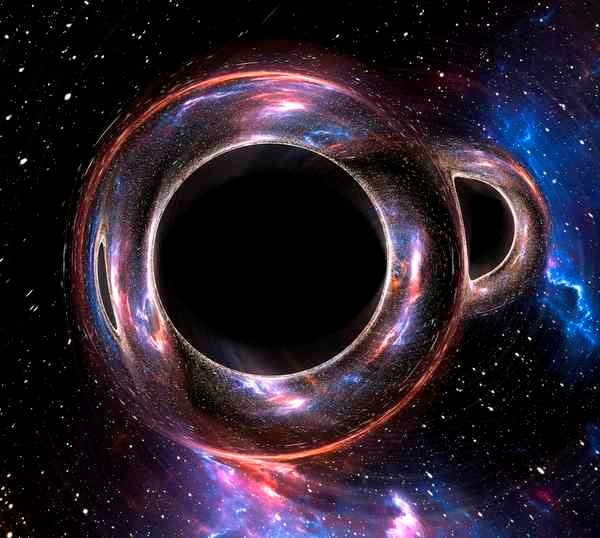
On January 14, 2025, scientists detected a significant gravitational wave signal known as GW250114, marking the clearest observation of its kind to date. This signal, which originated from the collision of two black holes in deep space, was received by the twin Laser Interferometer Gravitational Wave Observatories (LIGO) in the United States. The clarity of this detection offers new insights into the fundamental laws that govern our universe, particularly in relation to Albert Einstein’s theory of general relativity.
The extraordinary quality of the signal has provided researchers with a unique opportunity to conduct advanced tests of general relativity. When two black holes merge, the resulting black hole emits gravitational waves at specific frequencies, akin to a bell ringing. These frequencies, referred to as “tones,” can be measured to yield precise information about the mass and spin of the newly formed black hole. By capturing two distinct tones and constraining a third from GW250114, scientists achieved two independent measurements of the black hole’s properties.
What stands out in this discovery is that all three measurements align perfectly with Einstein’s predictions. Keefe Mitman, a physicist at Cornell University, noted that these findings reinforce the validity of general relativity, which describes how gravity operates by curving the fabric of space and time.
Despite this confirmation, physicists like Mitman express a sense of cautious optimism. They argue that while Einstein’s theory has proven robust, it is likely incomplete. General relativity does not adequately address phenomena such as dark matter and dark energy, nor does it effectively explain gravitational behavior at the quantum level. The complexities of reconciling general relativity with quantum mechanics present ongoing challenges in theoretical physics.
As researchers continue to refine their detection methods, the significance of GW250114 extends beyond merely validating existing theories. It embodies a promise of future discoveries that could unveil the limitations of our current understanding of the universe. The day physicists uncover where general relativity may falter could lead to profound revelations about the fundamental workings of reality itself.
In summary, while Einstein’s theory remains unbeaten for now, the enhanced capabilities of gravitational wave detectors bring the scientific community closer to answering some of the most pressing questions about the universe. The implications of this discovery resonate not just within the field of physics but also in our broader quest for knowledge about the cosmos.

Urgent Tax Savings Alert: Maximize Deductions Before April 15

Trump’s Administration Faces Uncertainty Over Government Shutdowns

Cosmic Defects: The Mystery of the Universe’s Missing Anomalies

Rapid City Parks Department Opens Registration for Bocce Leagues

Samsung Galaxy Watch 9 to Feature Larger 435mAh Battery Soon

Two Dead After Student Boats Capsize Off Okinawa Coast

Healthy Choice Wellness Reports Earnings with Mixed Results

Prince Harry Positions Himself as Royal Family’s Image Reviver

All Points North Lodge Achieves FSPHP-ETA Accreditation

Send Holiday Parcels for £1.99 with New Comparison Service

University of Hawaiʻi Leads $25M AI Project to Monitor Natural Disasters

Maui County Reopens Upgraded Lānaʻi Fifth Street Courts Today!

Daily Codeword Puzzle Launches on October 21, 2025

Congresswoman Under Fire for Misleading Epstein Donation Claims

Interstellar Object 3I/ATLAS Emits Unique Metal Alloy, Says Scientist

Trump Vows to Resolve Afghanistan-Pakistan Crisis “Very Quickly”

Charles Darwin’s Address Book Reveals Hidden Aspects of His Life

Rediscovering Chrysler: 5 Overlooked Models from the 1980s
-
 Lifestyle8 months ago
Send Holiday Parcels for £1.99 with New Comparison Service
-
Science9 months ago
University of Hawaiʻi Leads $25M AI Project to Monitor Natural Disasters
-
 Top Stories8 months ago
Maui County Reopens Upgraded Lānaʻi Fifth Street Courts Today!
-
 Entertainment10 months ago
Daily Codeword Puzzle Launches on October 21, 2025
-
 Lifestyle9 months ago
Congresswoman Under Fire for Misleading Epstein Donation Claims
-
 Science10 months ago
Interstellar Object 3I/ATLAS Emits Unique Metal Alloy, Says Scientist
-
 Top Stories9 months ago
Trump Vows to Resolve Afghanistan-Pakistan Crisis “Very Quickly”
-
 Science8 months ago
Charles Darwin’s Address Book Reveals Hidden Aspects of His Life
-
 Lifestyle8 months ago
Rediscovering Chrysler: 5 Overlooked Models from the 1980s
-

 Science7 months ago
Understanding Generation Z: Strategies for Engaging the Workforce
-

 Entertainment10 months ago
Kelly McCreary Discusses Future of Maggie and Winston in Grey’s Anatomy
-

 Top Stories8 months ago
aespa Faces Backlash Over G-Dragon Interaction at 2025 MAMAs