
Science
NASA Revamps Artemis 3 Mission, Starship’s Role Uncertain

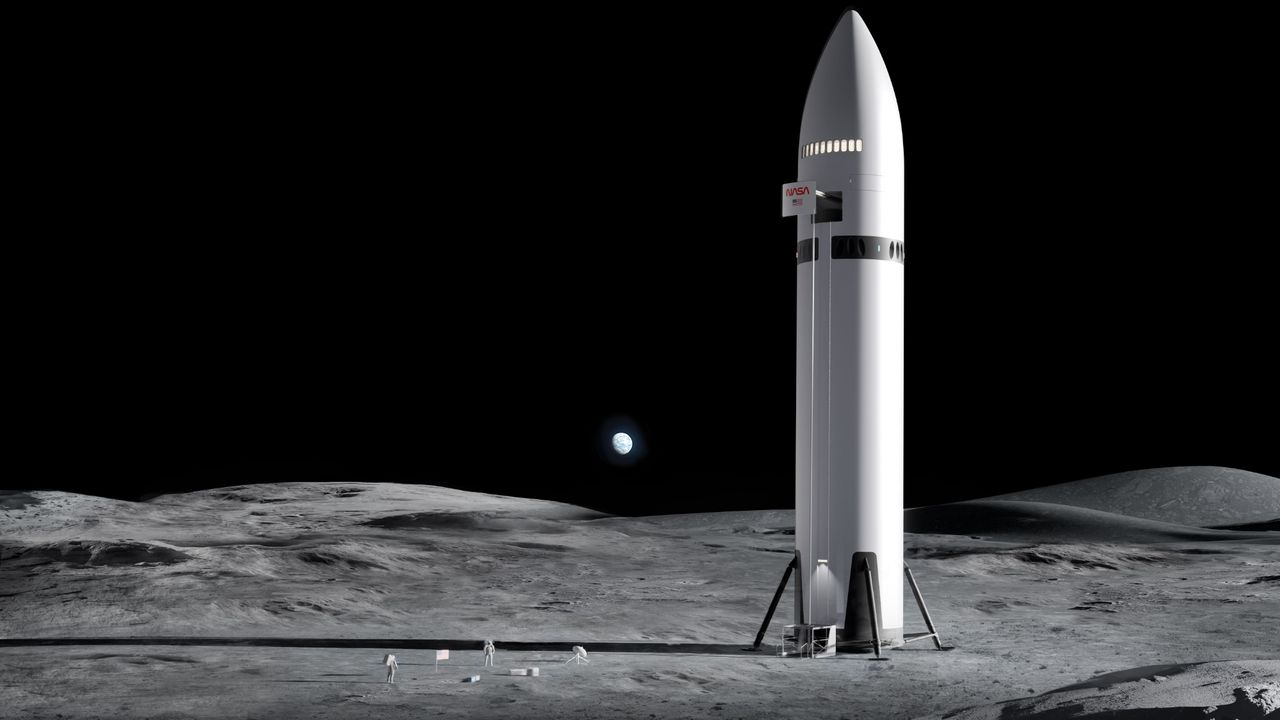
NASA has announced significant changes to its Artemis 3 mission, indicating that it will no longer land astronauts on the moon. Instead, the mission will focus on demonstrating key technologies in low Earth orbit. This announcement, made on February 27, 2024, raises questions about the involvement of SpaceX’s Starship megarocket, which was initially planned to be used for lunar landings.
The revamped Artemis 3 mission is now scheduled to launch in 2027, with a primary objective of testing capabilities such as rendezvous and docking procedures between the Orion crew capsule and commercial landers from SpaceX and Blue Origin. NASA officials confirmed that the mission would not include a lunar landing, marking a shift in focus towards developing operational technologies.
The new direction comes on the heels of frustrations regarding the pace of Starship’s development. In a statement, former Acting Administrator Sean Duffy expressed his concerns, indicating that the Artemis 3 landing contract would be opened to competition. Starship has undergone 11 test flights, but it has yet to achieve Earth orbit, underscoring the challenges faced in its development.
NASA is now considering Blue Origin’s crewed lander, known as Blue Moon, as a viable option. Originally intended for the Artemis 5 mission, targeted for 2030, Blue Origin may be positioned to support earlier lunar missions. Don Platt, head of the Department of Aerospace, Physics and Space Sciences at the Florida Institute of Technology, noted that the wording of NASA’s announcement suggests a competitive landscape that includes both SpaceX and Blue Origin.
In late January, Blue Origin announced a pause in its suborbital space tourism flights for at least two years to expedite the development of its lunar capabilities. The company stated that this decision reflects its commitment to the nation’s goals of returning to the moon and establishing a sustainable lunar presence.
Shifting Objectives and Increased Launch Cadence
The revised Artemis architecture envisions the first crewed lunar landing since the Apollo missions to occur during the Artemis 4 mission in 2028, with the possibility of a second landing later that same year. NASA is adopting a more methodical approach, emphasizing a step-by-step strategy and increasing launch frequency. As of now, it has been over three years since the first Artemis mission launched, while preparations for the Artemis 2 crewed mission are underway.
NASA officials indicated that they intend to continue using the current configuration of the Space Launch System (SLS) rocket, aiming to keep it as close to the existing “Block I” version as possible. This contrasts with earlier plans for Artemis 4, which included a more advanced “Block IB” variant with enhanced capabilities.
The overarching goal of the Artemis program remains to establish a permanent, sustainable human presence on and around the moon within the next five to ten years. There is an urgent desire to land astronauts before China achieves its lunar ambitions, projected for 2030. In a statement, NASA Administrator Jared Isaacman emphasized the need for rapid progress in light of increasing competition from geopolitical adversaries.
“With credible competition from our greatest geopolitical adversary increasing by the day, we need to move faster, eliminate delays, and achieve our objectives,” Isaacman stated. He reiterated that a standardized vehicle configuration and a logical, phased approach are essential for success, reflecting the strategies that allowed for the historic Apollo missions.
As NASA continues to reshape its lunar exploration strategy, the future of its partnerships with commercial entities like SpaceX and Blue Origin remains pivotal. The competition to secure contracts for lunar landings is intensifying, and the agency’s next steps will be closely watched as it navigates the complexities of modern space exploration.

Urgent Tax Savings Alert: Maximize Deductions Before April 15

Trump’s Administration Faces Uncertainty Over Government Shutdowns

Cosmic Defects: The Mystery of the Universe’s Missing Anomalies

Rapid City Parks Department Opens Registration for Bocce Leagues

Samsung Galaxy Watch 9 to Feature Larger 435mAh Battery Soon

Two Dead After Student Boats Capsize Off Okinawa Coast

Healthy Choice Wellness Reports Earnings with Mixed Results

Prince Harry Positions Himself as Royal Family’s Image Reviver

All Points North Lodge Achieves FSPHP-ETA Accreditation

Send Holiday Parcels for £1.99 with New Comparison Service

University of Hawaiʻi Leads $25M AI Project to Monitor Natural Disasters

Maui County Reopens Upgraded Lānaʻi Fifth Street Courts Today!

Daily Codeword Puzzle Launches on October 21, 2025

Congresswoman Under Fire for Misleading Epstein Donation Claims

Interstellar Object 3I/ATLAS Emits Unique Metal Alloy, Says Scientist

Trump Vows to Resolve Afghanistan-Pakistan Crisis “Very Quickly”

Charles Darwin’s Address Book Reveals Hidden Aspects of His Life

Rediscovering Chrysler: 5 Overlooked Models from the 1980s
-
 Lifestyle8 months ago
Send Holiday Parcels for £1.99 with New Comparison Service
-
Science9 months ago
University of Hawaiʻi Leads $25M AI Project to Monitor Natural Disasters
-
 Top Stories8 months ago
Maui County Reopens Upgraded Lānaʻi Fifth Street Courts Today!
-
 Entertainment10 months ago
Daily Codeword Puzzle Launches on October 21, 2025
-
 Lifestyle9 months ago
Congresswoman Under Fire for Misleading Epstein Donation Claims
-
 Science10 months ago
Interstellar Object 3I/ATLAS Emits Unique Metal Alloy, Says Scientist
-
 Top Stories9 months ago
Trump Vows to Resolve Afghanistan-Pakistan Crisis “Very Quickly”
-
 Science8 months ago
Charles Darwin’s Address Book Reveals Hidden Aspects of His Life
-
 Lifestyle8 months ago
Rediscovering Chrysler: 5 Overlooked Models from the 1980s
-

 Science7 months ago
Understanding Generation Z: Strategies for Engaging the Workforce
-

 Entertainment10 months ago
Kelly McCreary Discusses Future of Maggie and Winston in Grey’s Anatomy
-

 Top Stories8 months ago
aespa Faces Backlash Over G-Dragon Interaction at 2025 MAMAs