
Science
New Study Reveals Short Lifespan of Technological Civilisations

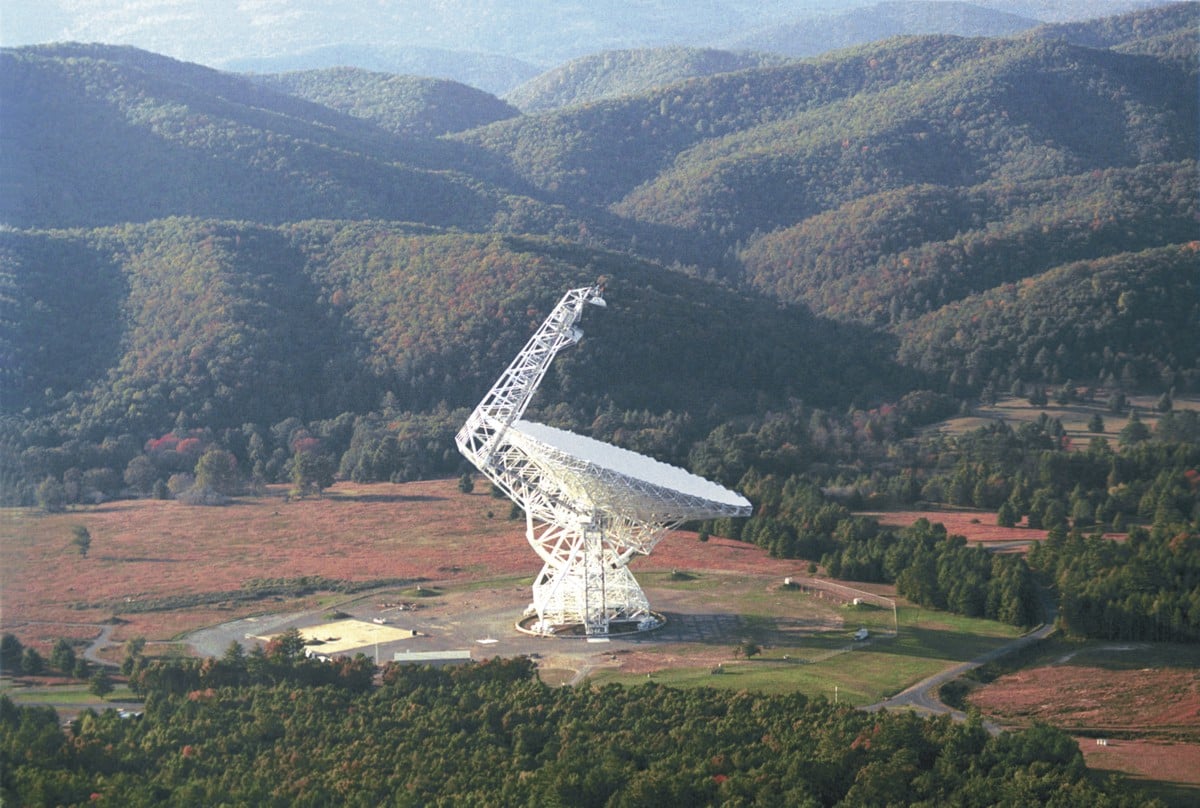
The question of why humanity has not encountered extraterrestrial civilisations has intrigued scientists for decades. This inquiry, known as the Fermi paradox, has drawn renewed attention following a study from two physicists at Sharif University of Technology in Tehran. Rather than pondering why these civilisations have not made contact, Sohrab Rahvar and Shahin Rouhani have focused on what the absence of contact signifies about the longevity of technologically advanced societies.
The researchers approached the paradox by considering the vastness of the universe, estimated to be around 13 billion years old. With countless stars in our galaxy, many of which host planets within the habitable zone for liquid water, one would expect that life has emerged multiple times elsewhere. Yet, the silence is deafening.
Employing mathematical models grounded in the Drake Equation, which seeks to estimate the number of communicative civilisations, Rahvar and Rouhani introduced a significant constraint related to electromagnetic communication. They highlighted that our radio telescopes have been operational long enough for a “light cone,” covering a period of roughly 100,000 years, to encompass the entire history of our galaxy. If any technologically advanced civilisations existed during that timeframe and emitted detectable signals, they should have been heard by now.
The findings suggest that the silence is not merely a result of our limited technology but indicates a genuine absence of long-lasting civilisations. The researchers concluded that, if intelligent life is common, such civilisations likely survive for no more than approximately 5,000 years. This figure starkly contrasts with the idea of civilisations existing for millions or even tens of thousands of years. It positions the entirety of recorded human history within a precarious timeframe.
The authors candidly list potential threats to civilisations, including asteroid impacts, supervolcano eruptions, climate change, pandemics, nuclear conflict, artificial intelligence, and rogue biotechnology. They reference historical examples of collapsed civilisations like those of the Romans, the Maya, and Easter Island—each of which failed to recover from their declines. In an interconnected world, the implications of a civilisation-ending catastrophe could, for the first time, be global in scale.
While the study does not claim that civilisations must perish after 5,000 years, it suggests that, on average, they cannot survive much longer than this if we are to account for the silence observed in the cosmos. The researchers note that other explanations remain viable; civilisations may choose not to communicate, we may be among the first intelligent species, or the vast distances between stars may simply inhibit contact.
The underlying message of this research is compelling: the galaxy may once have been, or may still be, populated with civilisations that thrived, created remarkable achievements, and ultimately fell silent. Whether through conflict, environmental disaster, or the misuse of their own technologies, the universe appears to impose a strict limit on the persistence of intelligence. As humanity navigates its own technological path, the question remains: which fate awaits us?
This study adds a new layer to the ongoing discussion about the future of intelligent life in the universe and the challenges that may threaten its existence. The implications are profound, urging a reevaluation of how we understand our place in the cosmos and the fragile nature of our technological advancement.
For further details, refer to the study titled “Constraining the Lifespan of Intelligent Technological Civilisation in the Galaxy.”

Urgent Tax Savings Alert: Maximize Deductions Before April 15

Trump’s Administration Faces Uncertainty Over Government Shutdowns

Cosmic Defects: The Mystery of the Universe’s Missing Anomalies

Rapid City Parks Department Opens Registration for Bocce Leagues

Samsung Galaxy Watch 9 to Feature Larger 435mAh Battery Soon

Two Dead After Student Boats Capsize Off Okinawa Coast

Healthy Choice Wellness Reports Earnings with Mixed Results

Prince Harry Positions Himself as Royal Family’s Image Reviver

All Points North Lodge Achieves FSPHP-ETA Accreditation

Send Holiday Parcels for £1.99 with New Comparison Service

University of Hawaiʻi Leads $25M AI Project to Monitor Natural Disasters

Maui County Reopens Upgraded Lānaʻi Fifth Street Courts Today!

Daily Codeword Puzzle Launches on October 21, 2025

Congresswoman Under Fire for Misleading Epstein Donation Claims

Interstellar Object 3I/ATLAS Emits Unique Metal Alloy, Says Scientist

Trump Vows to Resolve Afghanistan-Pakistan Crisis “Very Quickly”

Charles Darwin’s Address Book Reveals Hidden Aspects of His Life

Rediscovering Chrysler: 5 Overlooked Models from the 1980s
-
 Lifestyle8 months ago
Send Holiday Parcels for £1.99 with New Comparison Service
-
Science9 months ago
University of Hawaiʻi Leads $25M AI Project to Monitor Natural Disasters
-
 Top Stories8 months ago
Maui County Reopens Upgraded Lānaʻi Fifth Street Courts Today!
-
 Entertainment10 months ago
Daily Codeword Puzzle Launches on October 21, 2025
-
 Lifestyle9 months ago
Congresswoman Under Fire for Misleading Epstein Donation Claims
-
 Science10 months ago
Interstellar Object 3I/ATLAS Emits Unique Metal Alloy, Says Scientist
-
 Top Stories9 months ago
Trump Vows to Resolve Afghanistan-Pakistan Crisis “Very Quickly”
-
 Science8 months ago
Charles Darwin’s Address Book Reveals Hidden Aspects of His Life
-
 Lifestyle8 months ago
Rediscovering Chrysler: 5 Overlooked Models from the 1980s
-

 Science7 months ago
Understanding Generation Z: Strategies for Engaging the Workforce
-

 Entertainment10 months ago
Kelly McCreary Discusses Future of Maggie and Winston in Grey’s Anatomy
-

 Top Stories8 months ago
aespa Faces Backlash Over G-Dragon Interaction at 2025 MAMAs