
Top Stories
Urgent Court Ruling Halts Deportation of 45,000 Haitians

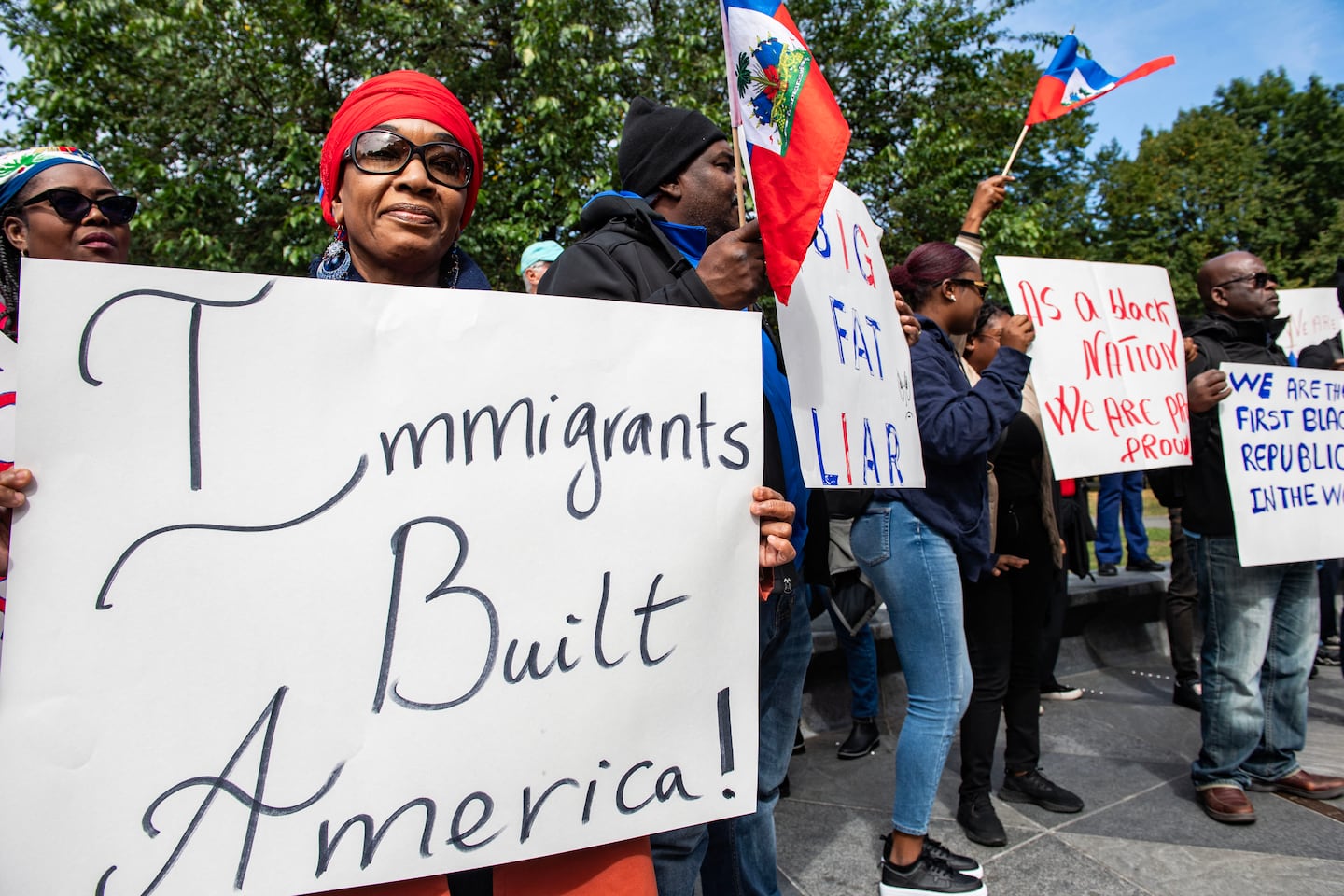
UPDATE: A federal judge has just halted the Trump administration’s attempt to end Temporary Protected Status (TPS) for approximately 45,000 Haitians living in Greater Boston. This urgent ruling comes just before the administration’s planned termination of TPS on February 3, 2025, offering a glimmer of hope to thousands facing deportation.
The Department of Homeland Security announced its intention to appeal the judge’s decision, setting the stage for a battle that could reach the U.S. Supreme Court. As it stands, Haitians have been shielded from deportation since 2010, due to ongoing turmoil in their home country. This latest development has left many in a state of confusion and anxiety.
In the wake of the judge’s ruling, relief swept through communities in and around Boston, which is home to the nation’s third-largest Haitian population. John Randall, CEO of Amego, Inc., a nonprofit organization in the area, recounted the chaos of notifying 24 Haitian employees that they were at risk of losing their jobs due to the TPS expiration. “Everyone is in a holding pattern but they’re still employable and legal today,” he stated. “They are living in states of uncertainty.”
The anxiety is palpable, with many TPS holders fearing that deportation could separate them from their families. Advocates emphasize the potential economic fallout if TPS is ultimately revoked. “This is just a write-off of an entire section of our workforce,” Randall warned, noting that several employees have worked at Amego for over a decade.
Nicole Albert, who runs the Gilbert Albert Community Center in Dorchester, reported a drastic drop in attendance for English classes, with numbers plummeting from 200 students per week to just 40 as fears of deportation took hold. “People were starting to hide, thinking, ‘I don’t want to get deported and then my kids stay behind,’” she said.
While the legal limbo continues, immigration attorneys clarify that TPS holders remain authorized to work. Leslie Ditrani, a Cambridge immigration lawyer, explained that no action is required from employers or employees at this time. Nevertheless, uncertainty has already led to job losses. More than 100 Haitian TPS holders lost their jobs at Logan Airport before the court ruling, as employers preemptively terminated their contracts.
Christopher White, CEO of Road to Responsibility, which serves individuals with developmental disabilities, shared that they have already lost 100 Haitian workers. “People were so ecstatic that they still had a job,” White recounted, reflecting on the emotional turmoil many faced. “Most of the Haitians I know have said the last place on earth they want to go back to is Haiti.”
The situation creates a complex emotional landscape. Dr. Karen Scanlan expressed concern for a worker at a group home who has built a close bond with her nonverbal autistic daughter. “It’s just heartbreaking to me that she can’t work because of this,” she lamented.
As the legal battle unfolds, communities brace for the potential consequences. Advocates warn that the expiration of TPS could devastate local economies that depend heavily on immigrant labor. The Boston Foundation reports that more than half of nursing assistants and personal care attendants in Greater Boston are immigrants, with many hailing from Haiti.
The urgency of this situation cannot be overstated. As the Trump administration prepares to escalate its efforts, the fate of tens of thousands hangs in the balance. This developing story will continue to unfold, and the local Haitian community remains hopeful yet anxious about what lies ahead.
Stay tuned for updates on this critical issue as it develops.

Urgent Tax Savings Alert: Maximize Deductions Before April 15

Trump’s Administration Faces Uncertainty Over Government Shutdowns

Cosmic Defects: The Mystery of the Universe’s Missing Anomalies

Rapid City Parks Department Opens Registration for Bocce Leagues

Samsung Galaxy Watch 9 to Feature Larger 435mAh Battery Soon

Two Dead After Student Boats Capsize Off Okinawa Coast

Healthy Choice Wellness Reports Earnings with Mixed Results

Prince Harry Positions Himself as Royal Family’s Image Reviver

All Points North Lodge Achieves FSPHP-ETA Accreditation

Send Holiday Parcels for £1.99 with New Comparison Service

University of Hawaiʻi Leads $25M AI Project to Monitor Natural Disasters

Maui County Reopens Upgraded Lānaʻi Fifth Street Courts Today!

Daily Codeword Puzzle Launches on October 21, 2025

Congresswoman Under Fire for Misleading Epstein Donation Claims

Interstellar Object 3I/ATLAS Emits Unique Metal Alloy, Says Scientist

Trump Vows to Resolve Afghanistan-Pakistan Crisis “Very Quickly”

Charles Darwin’s Address Book Reveals Hidden Aspects of His Life

Rediscovering Chrysler: 5 Overlooked Models from the 1980s
-
 Lifestyle8 months ago
Send Holiday Parcels for £1.99 with New Comparison Service
-
Science9 months ago
University of Hawaiʻi Leads $25M AI Project to Monitor Natural Disasters
-
 Top Stories8 months ago
Maui County Reopens Upgraded Lānaʻi Fifth Street Courts Today!
-
 Entertainment10 months ago
Daily Codeword Puzzle Launches on October 21, 2025
-
 Lifestyle9 months ago
Congresswoman Under Fire for Misleading Epstein Donation Claims
-
 Science10 months ago
Interstellar Object 3I/ATLAS Emits Unique Metal Alloy, Says Scientist
-
 Top Stories9 months ago
Trump Vows to Resolve Afghanistan-Pakistan Crisis “Very Quickly”
-
 Science8 months ago
Charles Darwin’s Address Book Reveals Hidden Aspects of His Life
-
 Lifestyle8 months ago
Rediscovering Chrysler: 5 Overlooked Models from the 1980s
-

 Science7 months ago
Understanding Generation Z: Strategies for Engaging the Workforce
-

 Entertainment10 months ago
Kelly McCreary Discusses Future of Maggie and Winston in Grey’s Anatomy
-

 Top Stories8 months ago
aespa Faces Backlash Over G-Dragon Interaction at 2025 MAMAs