
Top Stories
Urgent: Poland Considers Ban on Holocaust Documentary Amid Controversy

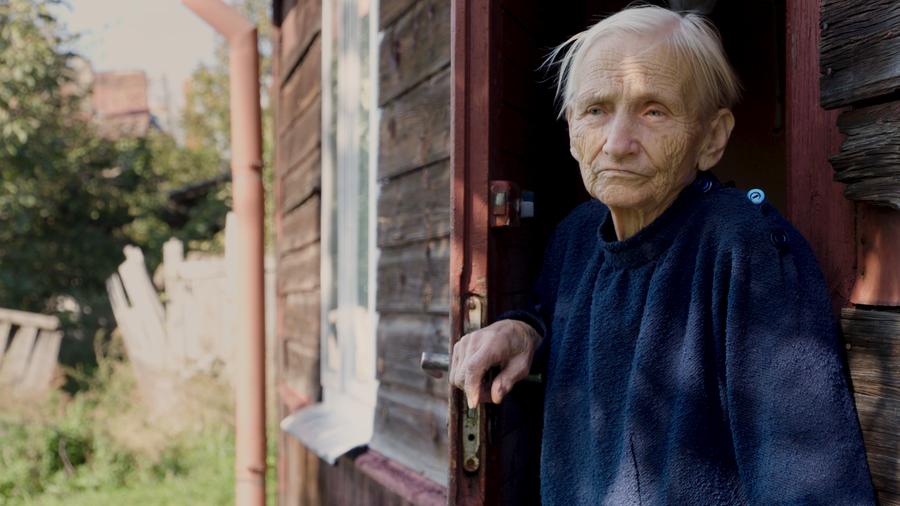
URGENT UPDATE: A documentary titled Among Neighbors, directed by filmmaker Yoav Potash, is facing a potential ban in Poland amid rising tensions over its portrayal of post-war antisemitism. The film, spotlighting the murder of five Jews in the small town of Gniewoszów after World War II, has sparked backlash from right-wing politicians and triggered a national investigation just weeks after its streaming release on January 1, 2025.
The documentary recounts the harrowing experiences of Jewish survivors returning to their hometown in 1945, only to be met with violence from their Polish neighbors. This narrative challenges the prevailing national sentiment and has drawn ire from the influential Law and Justice party, which previously governed Poland. Critics argue that the film undermines Polish history and promotes a narrative of national complicity in the Holocaust.
Following its debut at the Warsaw Jewish Film Festival in November 2024, the film was made available by TVP, the Polish public broadcaster. However, it has since faced severe criticism from officials. Senior civil servant Agnieszka Jędrzak, working under President Karol Nawrocki, condemned the film as “anti-Polish manipulation.” This sentiment resonates with the broader narrative pushed by the Law and Justice party, which has previously enacted legislation criminalizing accusations against Poland’s historical role in the Holocaust.
The backlash intensified when the conservative Ordo Iuris Institute, a Catholic think tank, lodged a complaint with the National Broadcasting Council, claiming the film distorts historical truths. They asserted that it portrays Poles as complicit in the genocide, which they deem “outrageous” given its broadcast by a Polish television station.
In response to the mounting pressure, the National Broadcasting Council has opened an investigation that could lead to the film’s removal from Polish airwaves. Despite the controversy, TVP has defended its decision to air the documentary, asserting it does not represent an anti-Polish stance and is vital for historical discourse.
Potash, who spent a decade documenting this story, was inspired to create the film after visiting Gniewoszów. He recounted a chilling conversation with a local woman who revealed that Jews had been killed in the town long after the Nazi regime had fallen. “It was not the Germans doing the killing, it was the Poles,” Potash stated. “It was not during the war, it was well after, when it should have been a time of peace.”
The film is supported by prominent institutions like the Jewish Historical Institute of Poland and the POLIN Museum of the History of Polish Jews, emphasizing its significance in shedding light on a painful aspect of Polish history.
As this story develops, the implications of the potential ban could resonate well beyond Poland, raising critical questions about historical accountability and freedom of expression in media.
Stay tuned for live updates on this urgent issue. To get more news, click here to sign up for our free daily newsletter.

Urgent Tax Savings Alert: Maximize Deductions Before April 15

Trump’s Administration Faces Uncertainty Over Government Shutdowns

Cosmic Defects: The Mystery of the Universe’s Missing Anomalies

Rapid City Parks Department Opens Registration for Bocce Leagues

Samsung Galaxy Watch 9 to Feature Larger 435mAh Battery Soon

Two Dead After Student Boats Capsize Off Okinawa Coast

Healthy Choice Wellness Reports Earnings with Mixed Results

Prince Harry Positions Himself as Royal Family’s Image Reviver

All Points North Lodge Achieves FSPHP-ETA Accreditation

Send Holiday Parcels for £1.99 with New Comparison Service

University of Hawaiʻi Leads $25M AI Project to Monitor Natural Disasters

Maui County Reopens Upgraded Lānaʻi Fifth Street Courts Today!

Daily Codeword Puzzle Launches on October 21, 2025

Congresswoman Under Fire for Misleading Epstein Donation Claims

Interstellar Object 3I/ATLAS Emits Unique Metal Alloy, Says Scientist

Trump Vows to Resolve Afghanistan-Pakistan Crisis “Very Quickly”

Charles Darwin’s Address Book Reveals Hidden Aspects of His Life

Rediscovering Chrysler: 5 Overlooked Models from the 1980s
-
 Lifestyle8 months ago
Send Holiday Parcels for £1.99 with New Comparison Service
-
Science9 months ago
University of Hawaiʻi Leads $25M AI Project to Monitor Natural Disasters
-
 Top Stories8 months ago
Maui County Reopens Upgraded Lānaʻi Fifth Street Courts Today!
-
 Entertainment10 months ago
Daily Codeword Puzzle Launches on October 21, 2025
-
 Lifestyle9 months ago
Congresswoman Under Fire for Misleading Epstein Donation Claims
-
 Science10 months ago
Interstellar Object 3I/ATLAS Emits Unique Metal Alloy, Says Scientist
-
 Top Stories9 months ago
Trump Vows to Resolve Afghanistan-Pakistan Crisis “Very Quickly”
-
 Science8 months ago
Charles Darwin’s Address Book Reveals Hidden Aspects of His Life
-
 Lifestyle8 months ago
Rediscovering Chrysler: 5 Overlooked Models from the 1980s
-

 Science7 months ago
Understanding Generation Z: Strategies for Engaging the Workforce
-

 Entertainment10 months ago
Kelly McCreary Discusses Future of Maggie and Winston in Grey’s Anatomy
-

 Entertainment7 months ago
Landmark Shift as Iconic Anime Series Concludes After 26 Years