
World
Fatal Train Collision Near Machu Picchu Injures Dozens


A serious train collision near Peru’s renowned Machu Picchu has resulted in one fatality and injuries to at least 40 individuals. According to the prosecutor’s office in Cusco, the deceased was the conductor of one of the trains involved in the incident. The collision occurred on the single track connecting the town of Ollantaytambo with Machu Picchu, a UNESCO World Heritage Site.
The U.S. Embassy in Peru confirmed that there were American citizens among the injured, though it did not disclose the number or severity of their injuries. Eyewitness videos shared with RPP Television depicted injured passengers lying alongside the tracks, with the two damaged locomotives visibly stranded nearby.
Emergency responders quickly mobilized to the scene, with a dozen ambulances dispatched to this remote Andean region, which lacks direct road access. Authorities are currently investigating the cause of the collision, which involved a train operated by PeruRail and another operated by Inca Rail. The accident occurred around lunchtime, resulting in immediate chaos and concern for the safety of those aboard.
Machu Picchu attracts approximately 4,500 visitors daily, many of whom travel by train and bus to access the historic site. This ancient citadel, built in the 15th century under the orders of the Inca ruler Pachacutec, stands at an altitude of about 2,500 meters (8,200 feet) and is celebrated for its architectural and engineering marvels.
As rescue operations continue, officials have not yet released further details about the investigation into the crash. The focus remains on providing care for the injured and ensuring the safety of travelers in this popular tourist destination.

Urgent Tax Savings Alert: Maximize Deductions Before April 15

Trump’s Administration Faces Uncertainty Over Government Shutdowns

Cosmic Defects: The Mystery of the Universe’s Missing Anomalies

Rapid City Parks Department Opens Registration for Bocce Leagues

Samsung Galaxy Watch 9 to Feature Larger 435mAh Battery Soon

Two Dead After Student Boats Capsize Off Okinawa Coast

Healthy Choice Wellness Reports Earnings with Mixed Results

Prince Harry Positions Himself as Royal Family’s Image Reviver

All Points North Lodge Achieves FSPHP-ETA Accreditation

Send Holiday Parcels for £1.99 with New Comparison Service

University of Hawaiʻi Leads $25M AI Project to Monitor Natural Disasters

Maui County Reopens Upgraded Lānaʻi Fifth Street Courts Today!

Daily Codeword Puzzle Launches on October 21, 2025

Congresswoman Under Fire for Misleading Epstein Donation Claims

Interstellar Object 3I/ATLAS Emits Unique Metal Alloy, Says Scientist

Trump Vows to Resolve Afghanistan-Pakistan Crisis “Very Quickly”

Charles Darwin’s Address Book Reveals Hidden Aspects of His Life

Rediscovering Chrysler: 5 Overlooked Models from the 1980s
-
 Lifestyle8 months ago
Send Holiday Parcels for £1.99 with New Comparison Service
-
Science9 months ago
University of Hawaiʻi Leads $25M AI Project to Monitor Natural Disasters
-
 Top Stories8 months ago
Maui County Reopens Upgraded Lānaʻi Fifth Street Courts Today!
-
 Entertainment10 months ago
Daily Codeword Puzzle Launches on October 21, 2025
-
 Lifestyle9 months ago
Congresswoman Under Fire for Misleading Epstein Donation Claims
-
 Science10 months ago
Interstellar Object 3I/ATLAS Emits Unique Metal Alloy, Says Scientist
-
 Top Stories9 months ago
Trump Vows to Resolve Afghanistan-Pakistan Crisis “Very Quickly”
-
 Science8 months ago
Charles Darwin’s Address Book Reveals Hidden Aspects of His Life
-
 Lifestyle8 months ago
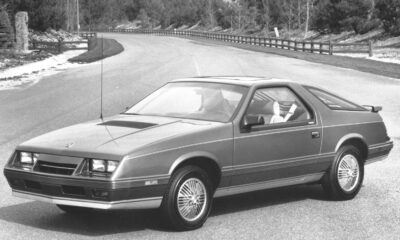
Rediscovering Chrysler: 5 Overlooked Models from the 1980s
-

 Science7 months ago
Understanding Generation Z: Strategies for Engaging the Workforce
-

 Entertainment10 months ago
Kelly McCreary Discusses Future of Maggie and Winston in Grey’s Anatomy
-

 Top Stories8 months ago
aespa Faces Backlash Over G-Dragon Interaction at 2025 MAMAs