
World
Myanmar Military Plans Controversial Elections Amid Civil Turmoil

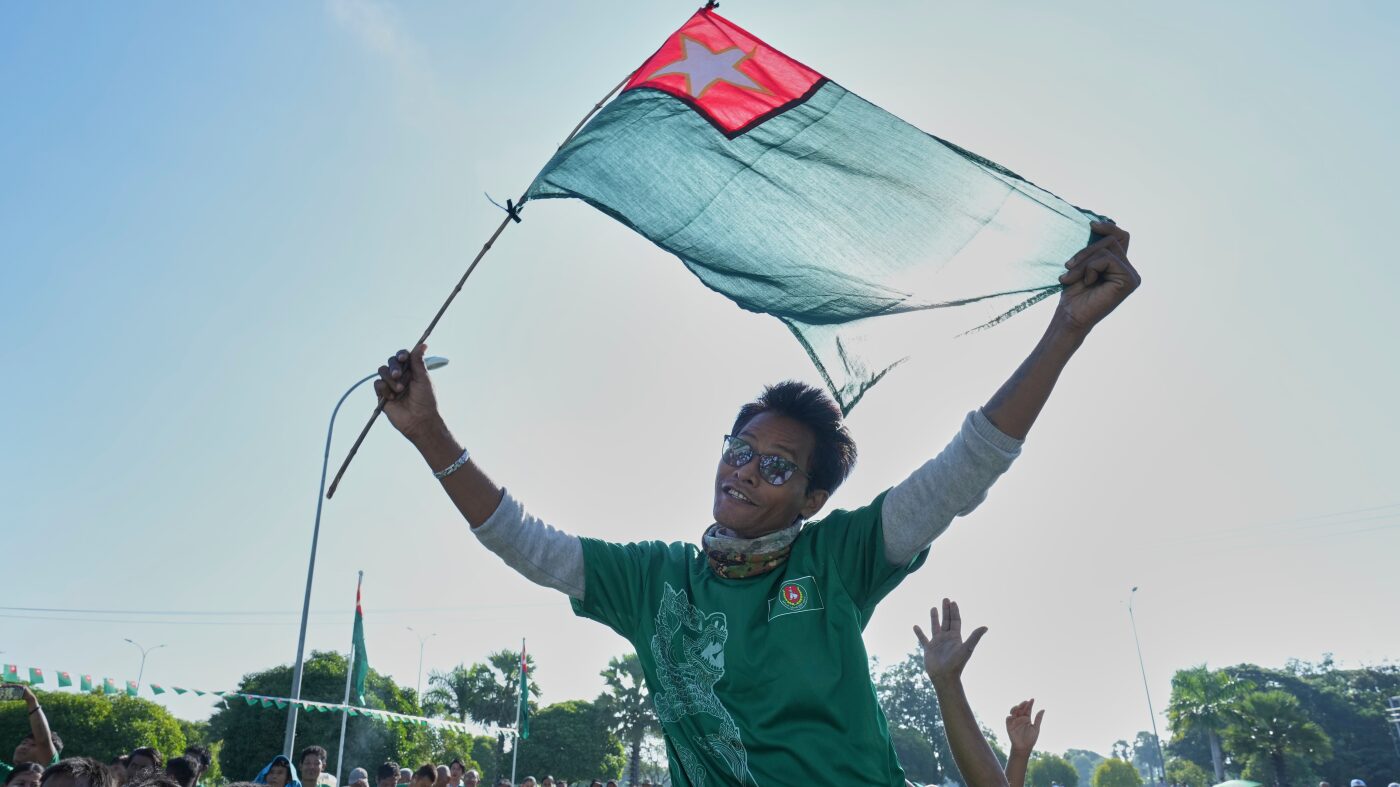
Myanmar’s military junta has announced a phased general election set to commence on December 28, 2023, and conclude in late January 2024. This initiative aims to restore stability in the country and alleviate the junta’s diplomatic isolation. However, critics have denounced the elections as a “sham,” claiming that the backdrop of ongoing civil unrest undermines any hope for a legitimate electoral process.
Since the military’s coup in February 2021, Myanmar has descended into chaos. A brutal civil war has erupted, with military forces bombarding civilian areas indiscriminately, resulting in tens of thousands of arrests and millions displaced. Currently, over 11 million people are experiencing food insecurity due to the conflicts, as the military struggles to regain control over territories seized by opposition forces.
At a recent summit of the Association of Southeast Asian Nations in Malaysia, United Nations Secretary-General António Guterres questioned the feasibility of fair elections under such conditions. “Is there anyone who believes that there will be free and fair elections in Myanmar?” he asked, highlighting the military’s poor human rights record and the ongoing conflict.
In a bid to manipulate the electoral outcome, the junta has enacted a law prohibiting what it terms “interference” in the election process. According to Human Rights Watch, nearly 100 individuals had been detained under this law by November 2023, with reports indicating that this figure has since more than doubled. Individuals have faced legal consequences for merely criticizing the elections, including those who engaged with posts on social media.
The military leader, Min Aung Hlaing, has acknowledged that the elections will not occur in numerous contested or rebel-held regions, which encompass nearly half of the country. Western governments have largely declined to observe the elections, branding them a “sham.” Critics contend that the junta is attempting to establish a parliament dominated by its proxy party, the Union Solidarity and Development Party (USDP). This is the same party that suffered a significant defeat in the 2020 election against Aung San Suu Kyi‘s National League for Democracy (NLD), which has been banned from participating in the upcoming elections.
The junta’s efforts to reclaim lost territory from rebel forces have intensified as it gears up for the elections. Morgan Michaels, a Southeast Asia security analyst at the International Institute for Strategic Studies in Singapore, noted that the military has begun to regain momentum after suffering significant losses. He cited enhanced organization, improved use of drones, and conscription campaigns as key factors contributing to the military’s renewed effectiveness on the battlefield.
China, a critical ally to Myanmar’s military, has expressed support for the elections. Although Beijing does not favor the military or the coup, it views the resulting chaos as a greater threat to its interests in the region. According to Yun Sun, director of the China program at the Stimson Center, Myanmar’s civil strife jeopardizes major Chinese infrastructure projects, including gas and oil pipelines. The country is seen as a vital corridor for China’s ambitions in South and Southeast Asia, making stability in Myanmar essential for Beijing.
In recent months, China has reportedly pressured ethnic armed organizations to relinquish territories they captured from the military. This has further complicated the situation for opposition groups, which lack the necessary resources to mount significant offensives. Michaels emphasized that the fragmentation and strategic missteps among these groups have hindered their ability to effectively challenge the junta.
Amid the ongoing conflict, fatigue is setting in among many who initially took up arms against the military. Analyst Min Zaw Oo observed that a growing number of young fighters are leaving the armed struggle for better opportunities abroad, such as in Thailand. Despite this, some remain committed to the cause. A rebel commander who once practiced medicine expressed frustration with the opposition’s lack of unity and direction, although he remains resolute about the need to confront the military.
David Mathieson, a long-time analyst on Myanmar, noted that the shadow National Unity Government, the political body formed post-coup, is losing credibility among citizens. Many are looking for any semblance of stability, even if it means accepting a military-led regime. “We hate the regime, but at least they’ve got a plan,” some citizens reportedly said, illustrating a growing despair over prospects for democracy.
As the military prepares for its elections, it is gambling on the hope that a semblance of order can be restored, potentially easing its international isolation. The second and third rounds of elections are slated for January, while the outlook for a genuine democratic transition remains bleak.

Urgent Tax Savings Alert: Maximize Deductions Before April 15

Trump’s Administration Faces Uncertainty Over Government Shutdowns

Cosmic Defects: The Mystery of the Universe’s Missing Anomalies

Rapid City Parks Department Opens Registration for Bocce Leagues

Samsung Galaxy Watch 9 to Feature Larger 435mAh Battery Soon

Two Dead After Student Boats Capsize Off Okinawa Coast

Healthy Choice Wellness Reports Earnings with Mixed Results

Prince Harry Positions Himself as Royal Family’s Image Reviver

All Points North Lodge Achieves FSPHP-ETA Accreditation

Send Holiday Parcels for £1.99 with New Comparison Service

University of Hawaiʻi Leads $25M AI Project to Monitor Natural Disasters

Maui County Reopens Upgraded Lānaʻi Fifth Street Courts Today!

Daily Codeword Puzzle Launches on October 21, 2025

Congresswoman Under Fire for Misleading Epstein Donation Claims

Interstellar Object 3I/ATLAS Emits Unique Metal Alloy, Says Scientist

Trump Vows to Resolve Afghanistan-Pakistan Crisis “Very Quickly”

Charles Darwin’s Address Book Reveals Hidden Aspects of His Life

Rediscovering Chrysler: 5 Overlooked Models from the 1980s
-
 Lifestyle8 months ago
Send Holiday Parcels for £1.99 with New Comparison Service
-
Science9 months ago
University of Hawaiʻi Leads $25M AI Project to Monitor Natural Disasters
-
 Top Stories8 months ago
Maui County Reopens Upgraded Lānaʻi Fifth Street Courts Today!
-
 Entertainment10 months ago
Daily Codeword Puzzle Launches on October 21, 2025
-
 Lifestyle9 months ago
Congresswoman Under Fire for Misleading Epstein Donation Claims
-
 Science10 months ago
Interstellar Object 3I/ATLAS Emits Unique Metal Alloy, Says Scientist
-
 Top Stories9 months ago
Trump Vows to Resolve Afghanistan-Pakistan Crisis “Very Quickly”
-
 Science8 months ago
Charles Darwin’s Address Book Reveals Hidden Aspects of His Life
-
 Lifestyle8 months ago
Rediscovering Chrysler: 5 Overlooked Models from the 1980s
-

 Science7 months ago
Understanding Generation Z: Strategies for Engaging the Workforce
-

 Entertainment10 months ago
Kelly McCreary Discusses Future of Maggie and Winston in Grey’s Anatomy
-

 Top Stories8 months ago
aespa Faces Backlash Over G-Dragon Interaction at 2025 MAMAs