
World
NATO Readies for Arctic Mission Amid Calls for Increased Presence

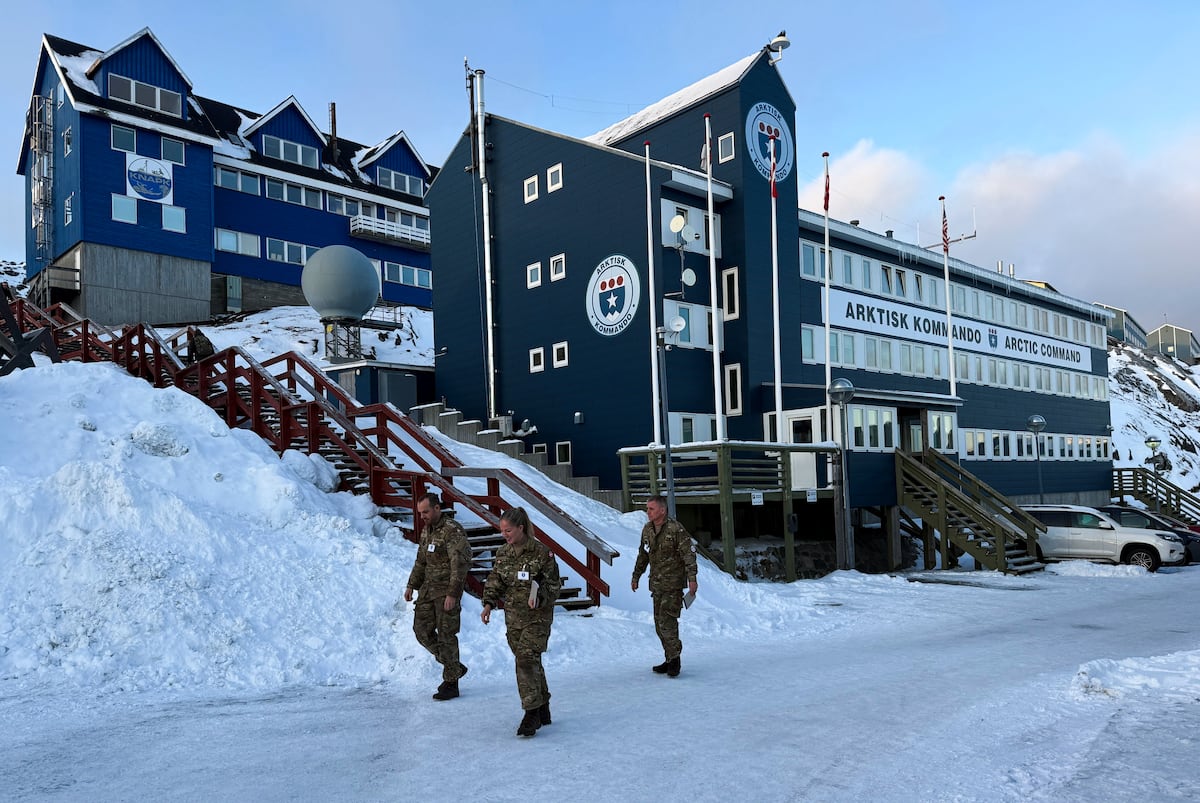
NATO is poised to engage in a potential Arctic mission but has yet to initiate any planning due to a lack of political direction, according to General Alexus Grynkewich, the Supreme Allied Commander Europe. Speaking at a press briefing in Brussels following a meeting of the alliance’s top military leaders, he emphasized that while discussions are ongoing, concrete planning has not commenced.
“We’re aware of discussions about this, of course, and therefore we’re doing some thinking about how we would organize for it, but no planning has started yet,” Grynkewich stated. He noted that NATO’s military headquarters possesses significant expertise that could be instrumental in organizing an Arctic mission, regardless of whether it is named “Arctic Sentry” or another title.
The call for a stronger NATO presence in the Arctic primarily comes from European members, including the Nordic countries, the Netherlands, France, and the United Kingdom. These nations seek to bolster security measures in response to perceived threats from Russia and China.
Political Context and Military Preparedness
The NATO chiefs of defense convened during a politically charged week, particularly following Denmark’s steps to enhance its military presence on Greenland. This move came after repeated demands from U.S. President Donald Trump regarding the island’s governance, which included threats of tariffs against allies supporting Denmark’s position. Trump subsequently retracted these threats, citing the “framework of a future deal” on March 13, 2024.
Grynkewich explained that Thursday’s meeting was focused on military readiness, indicating, “We, of course, are aware of the political discussions that are going on, but there was never a military dimension to those discussions that made its way down to us.” Admiral Giuseppe Cavo Dragone, chair of the NATO Military Committee, described the meeting as “entirely uneventful” from a military planning perspective and noted that the command is awaiting further direction before taking action.
Emerging Security Challenges in the Arctic
The changing climate is reshaping access to the Arctic, making control of this region increasingly vital for NATO and other nations that maintain maritime deterrence. Admiral Pierre Vandier, Supreme Allied Commander Transformation, highlighted the importance of considering “space and ballistic issues” in light of global threats. The Pituffik Space Base in Greenland serves as a strategic location for U.S. early-warning radar systems, with the Arctic providing the shortest missile trajectory from Russian launch sites to North America.
Grynkewich expressed concern over the growing collaboration between Russia and China in the Arctic, noting their increased joint operations in maritime and air domains. “One of the most concerning changes in the security situation is Russia and China increasingly working together in the Arctic,” he remarked.
NATO is enhancing its capabilities to operate in the Arctic’s challenging climate and plans to conduct several exercises in the region in the coming months. Although none of these exercises will occur in Greenland, Grynkewich assured that the alliance possesses ample resources for maritime and air operations if tasked with vigilance activities.
He emphasized the critical role of Finland and Sweden in strengthening NATO’s northern flank, stating that their militaries offer “tremendous capabilities” for Arctic security. Grynkewich expressed confidence in NATO’s preparedness, asserting, “I’m confident that if we’re tasked to do any specific mission or just to continue our general approach to the Arctic, we’re well postured.”
As NATO navigates the complexities of geopolitical dynamics in the Arctic, the alliance’s military leaders remain vigilant, awaiting the necessary political guidance to act decisively in this strategically significant region.

Urgent Tax Savings Alert: Maximize Deductions Before April 15

Trump’s Administration Faces Uncertainty Over Government Shutdowns

Cosmic Defects: The Mystery of the Universe’s Missing Anomalies

Rapid City Parks Department Opens Registration for Bocce Leagues

Samsung Galaxy Watch 9 to Feature Larger 435mAh Battery Soon

Two Dead After Student Boats Capsize Off Okinawa Coast

Healthy Choice Wellness Reports Earnings with Mixed Results

Prince Harry Positions Himself as Royal Family’s Image Reviver

All Points North Lodge Achieves FSPHP-ETA Accreditation

Send Holiday Parcels for £1.99 with New Comparison Service

University of Hawaiʻi Leads $25M AI Project to Monitor Natural Disasters

Maui County Reopens Upgraded Lānaʻi Fifth Street Courts Today!

Daily Codeword Puzzle Launches on October 21, 2025

Congresswoman Under Fire for Misleading Epstein Donation Claims

Interstellar Object 3I/ATLAS Emits Unique Metal Alloy, Says Scientist

Trump Vows to Resolve Afghanistan-Pakistan Crisis “Very Quickly”

Charles Darwin’s Address Book Reveals Hidden Aspects of His Life

Rediscovering Chrysler: 5 Overlooked Models from the 1980s
-
 Lifestyle8 months ago
Send Holiday Parcels for £1.99 with New Comparison Service
-
Science9 months ago
University of Hawaiʻi Leads $25M AI Project to Monitor Natural Disasters
-
 Top Stories8 months ago
Maui County Reopens Upgraded Lānaʻi Fifth Street Courts Today!
-
 Entertainment10 months ago
Daily Codeword Puzzle Launches on October 21, 2025
-
 Lifestyle9 months ago
Congresswoman Under Fire for Misleading Epstein Donation Claims
-
 Science10 months ago
Interstellar Object 3I/ATLAS Emits Unique Metal Alloy, Says Scientist
-
 Top Stories9 months ago
Trump Vows to Resolve Afghanistan-Pakistan Crisis “Very Quickly”
-
 Science8 months ago
Charles Darwin’s Address Book Reveals Hidden Aspects of His Life
-
 Lifestyle8 months ago
Rediscovering Chrysler: 5 Overlooked Models from the 1980s
-

 Science7 months ago
Understanding Generation Z: Strategies for Engaging the Workforce
-

 Entertainment10 months ago
Kelly McCreary Discusses Future of Maggie and Winston in Grey’s Anatomy
-

 Entertainment7 months ago
Landmark Shift as Iconic Anime Series Concludes After 26 Years