
World
Norway Constructs World’s Longest Undersea Tunnel, Rogfast

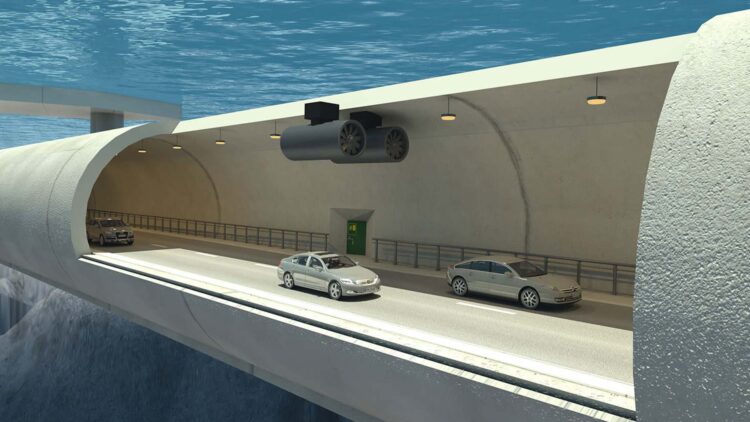
Norway is embarking on an ambitious civil engineering project to construct the world’s longest and deepest undersea road tunnel, known as Rogfast. This monumental structure will stretch over 26 kilometers, reaching depths of nearly 400 meters below sea level. Connecting the cities of Stavanger and Haugesund in the Rogaland region, Rogfast promises to transform transportation across these vital areas.
Currently, motorists rely on ferries to navigate the waters between Stavanger and Haugesund. Once operational, Rogfast will allow vehicles to traverse directly beneath the seabed, significantly reducing travel time by more than 40 minutes. This development is not merely a local shortcut but a crucial segment of the coastal highway E39, which links southern and northern Norway along the Atlantic coast.
Engineering Challenges and Innovations
The construction of Rogfast presents significant engineering challenges due to its extreme depth and length. As the tunnel passes beneath the fjords between Randaberg and Bokn, it must be designed to ensure public safety under immense water pressure and over long distances.
Engineers are implementing advanced techniques for critical systems such as ventilation, emergency evacuation, drainage, and structural integrity. Each design component must effectively handle routine traffic while being prepared for infrequent but serious incidents, including accidents or fires occurring far below the surface.
Economic and Environmental Implications
The impact of Rogfast extends beyond transportation efficiency. The current ferry services are often slow and subject to weather conditions, creating delays for both commuters and freight. With the introduction of the tunnel, traffic flow is expected to improve, thereby stimulating tourism and business activities in Rogaland. This increased connectivity is anticipated to facilitate the efficient transportation of goods and ease travel for residents visiting family or commuting to work.
Moreover, the Norwegian government aims to reduce carbon dioxide emissions from maritime transport by closing certain ferry routes. Ferries consume substantial fuel resources, operating intermittently. By providing a direct road link beneath the sea, Norway is promoting a more sustainable transportation model.
The estimated cost of this groundbreaking project exceeds €2 billion, with funding coming from the Norwegian government and future tolls collected from tunnel users. Construction is poised to continue throughout this decade, with the target completion date set for 2033.
As Norway leads the way in underwater tunnel construction, Rogfast will not only be a feat of engineering but also a benchmark for other nations facing similar geographical challenges. If successfully completed, this project will demonstrate that lengthy and deep underwater tunnels can function effectively, potentially inspiring similar initiatives worldwide. The Norwegian fjords, renowned for their beauty, will soon be transformed into vital connections, marking a new era in infrastructure development.

Urgent Tax Savings Alert: Maximize Deductions Before April 15

Trump’s Administration Faces Uncertainty Over Government Shutdowns

Cosmic Defects: The Mystery of the Universe’s Missing Anomalies

Rapid City Parks Department Opens Registration for Bocce Leagues

Samsung Galaxy Watch 9 to Feature Larger 435mAh Battery Soon

Two Dead After Student Boats Capsize Off Okinawa Coast

Healthy Choice Wellness Reports Earnings with Mixed Results

Prince Harry Positions Himself as Royal Family’s Image Reviver

All Points North Lodge Achieves FSPHP-ETA Accreditation

Send Holiday Parcels for £1.99 with New Comparison Service

University of Hawaiʻi Leads $25M AI Project to Monitor Natural Disasters

Maui County Reopens Upgraded Lānaʻi Fifth Street Courts Today!

Daily Codeword Puzzle Launches on October 21, 2025

Congresswoman Under Fire for Misleading Epstein Donation Claims

Interstellar Object 3I/ATLAS Emits Unique Metal Alloy, Says Scientist

Trump Vows to Resolve Afghanistan-Pakistan Crisis “Very Quickly”

Charles Darwin’s Address Book Reveals Hidden Aspects of His Life

Rediscovering Chrysler: 5 Overlooked Models from the 1980s
-
 Lifestyle8 months ago
Send Holiday Parcels for £1.99 with New Comparison Service
-
Science9 months ago
University of Hawaiʻi Leads $25M AI Project to Monitor Natural Disasters
-
 Top Stories8 months ago
Maui County Reopens Upgraded Lānaʻi Fifth Street Courts Today!
-
 Entertainment10 months ago
Daily Codeword Puzzle Launches on October 21, 2025
-
 Lifestyle9 months ago
Congresswoman Under Fire for Misleading Epstein Donation Claims
-
 Science10 months ago
Interstellar Object 3I/ATLAS Emits Unique Metal Alloy, Says Scientist
-
 Top Stories9 months ago
Trump Vows to Resolve Afghanistan-Pakistan Crisis “Very Quickly”
-
 Science8 months ago
Charles Darwin’s Address Book Reveals Hidden Aspects of His Life
-
 Lifestyle8 months ago
Rediscovering Chrysler: 5 Overlooked Models from the 1980s
-

 Science7 months ago
Understanding Generation Z: Strategies for Engaging the Workforce
-

 Entertainment10 months ago
Kelly McCreary Discusses Future of Maggie and Winston in Grey’s Anatomy
-

 Top Stories8 months ago
aespa Faces Backlash Over G-Dragon Interaction at 2025 MAMAs