
World
Scientists Restore Partial Vision in Blind Patients Using Innovative Implant

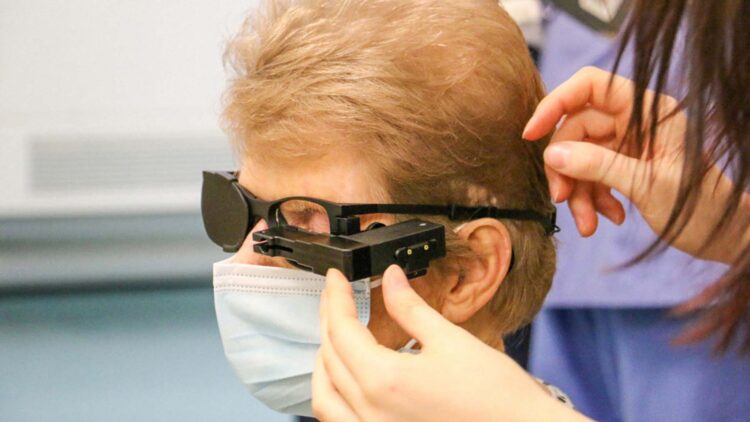
A groundbreaking study has shown that a wireless eye implant known as the PRIMA device can help partially blind patients regain some vision. Published in the New England Journal of Medicine, the research involved older adults suffering from geographic atrophy, a severe form of dry age-related macular degeneration (AMD). This condition gradually destroys the cells in the macula, impacting central vision and often leading to a loss of everyday activities like reading and driving.
Trial leader Dr. Frank Holz emphasized the significance of these findings, stating, “Late-stage age-related macular degeneration is a dismal disease. Patients are no longer capable of reading, driving a car, watching TV, or even recognizing faces. So [these results] are a game changer in my mind.” The PRIMA device, created by Stanford professor Daniel Palanker, has been developed further by a neural engineering company based in California.
How the PRIMA Device Works
The study included 38 participants, averaging 79 years old, who underwent the implantation of a small wireless chip beneath the retina of one eye. Following the implant surgery, patients wore augmented reality glasses linked to a portable image processor. The glasses’ camera captures the environment, and the images are transformed into infrared light before being projected onto the chip. This chip converts light into electrical signals, stimulating the remaining healthy cells in the macula, which the brain interprets as vision.
After one year, 32 participants returned for evaluation, revealing that approximately 80% experienced marked improvements in vision with the PRIMA system activated. For instance, Sheila Irvine, a 70-year-old participant, described her previous vision as “having two black discs in my eyes, with the outside distorted.” She expressed joy in being able to read her prescriptions and solve crossword puzzles again, a significant shift from her earlier experiences.
However, the implantation process carries risks. Surgeons must delicately lift the retina’s tissue, which can lead to complications such as bleeding or increased intraocular pressure. Although most issues resolved within two months, experts caution that not every patient is an ideal candidate for this complex procedure.
Hope for the Future, But Not a Cure
While the results of the study are promising, some eye specialists urge caution about expectations. Dr. Sunir Garg, a retina surgeon, pointed out that even with new medical therapies, the best outcomes can only slow the progression of AMD. He noted, “We can’t stop it, and we can’t do anything to bring back lost vision.” Patients using the PRIMA device still face challenges, as they see in black and white and require guidance to operate the system.
Another expert, Dr. Demetrios Vavvas, commented on the limitations of the device. He stated, “We shouldn’t oversell that the quality of life really improved. But there were certain visual tasks at which the patients were clearly better. So it shows to us that there is potential in this approach. It is still, in some ways, a prototype.”
Both Garg and Vavvas expressed a desire for future advancements. Vavvas questioned whether the improvements would be substantial enough for patients to claim regained independence for tasks such as managing bills or reading grocery labels. He emphasized the necessity for extended follow-up beyond one year to identify any long-term risks or complications.
According to Palanker, enhancements are on the horizon. His team is working on a more advanced chip that will boast a resolution of 10,000 pixels, a notable increase from the current 400 pixels. Additionally, they aim to develop next-generation software that enables patients to perceive not just black-and-white text but also grayscale images, potentially allowing for recognition of faces.
The PRIMA device represents a significant step forward in addressing the challenges faced by individuals with severe vision loss, yet it remains crucial to temper enthusiasm with an understanding of the limitations and risks involved. As research continues, the hope is to build on these findings and ultimately improve the quality of life for those affected by AMD.

Man Dies in Urgent NE OKC House Fire, Investigation Underway

Urgent: Man Dies in NE OKC House Fire, Crews Respond at 7:30 PM

Indigenous Elders Urgently Teach Hunting Amid Climate Crisis

Fallout Season 2 Premieres with Shocking New Threats, Watch Now

Attleboro High Girls Basketball Triumphs Over Canton, 53-48

California DMV DEMANDS Tesla END ‘Autopilot’ Marketing IMMEDIATELY

Stephen King’s 10 Most Gripping Novellas Revealed: Read Now!

Pentagon Escalates Investigation into Sen. Mark Kelly Amid Clash

Dior and Rizzoli Unveil Lady Art Project Book to Mark 10 Years

University of Hawaiʻi Leads $25M AI Project to Monitor Natural Disasters

Interstellar Object 3I/ATLAS Emits Unique Metal Alloy, Says Scientist

Send Holiday Parcels for £1.99 with New Comparison Service

Researchers Achieve Fastest Genome Sequencing in Under Four Hours

Iconic Sand Dollar Social Club Listed for $3 Million in Folly Beach

Afghan Refugee Detained by ICE After Asylum Hearing in New York

McEwen Inc. Secures Tartan Lake Gold Mine Through Acquisition

Peptilogics Secures $78 Million to Combat Prosthetic Joint Infections

Mars Observed: Detailed Imaging Reveals Dust Avalanche Dynamics
-
Science1 month ago
University of Hawaiʻi Leads $25M AI Project to Monitor Natural Disasters
-
 Science2 months ago
Interstellar Object 3I/ATLAS Emits Unique Metal Alloy, Says Scientist
-
 Lifestyle1 week ago
Send Holiday Parcels for £1.99 with New Comparison Service
-
 Science2 months ago
Researchers Achieve Fastest Genome Sequencing in Under Four Hours
-
 Business2 months ago
Iconic Sand Dollar Social Club Listed for $3 Million in Folly Beach
-
 Politics2 months ago
Afghan Refugee Detained by ICE After Asylum Hearing in New York
-
 Business2 months ago
McEwen Inc. Secures Tartan Lake Gold Mine Through Acquisition
-
 Health2 months ago
Peptilogics Secures $78 Million to Combat Prosthetic Joint Infections
-
 Science2 months ago
Mars Observed: Detailed Imaging Reveals Dust Avalanche Dynamics
-

 Lifestyle2 months ago
Jump for Good: San Clemente Pier Fundraiser Allows Legal Leaps
-
 Health2 months ago
Researcher Uncovers Zika Virus Pathway to Placenta Using Nanotubes
-

 Entertainment2 months ago
Jennifer Lopez Addresses A-Rod Split in Candid Interview