
World
U.S. Army Activates New Unit to Combat Malign Influence in Indo-Pacific

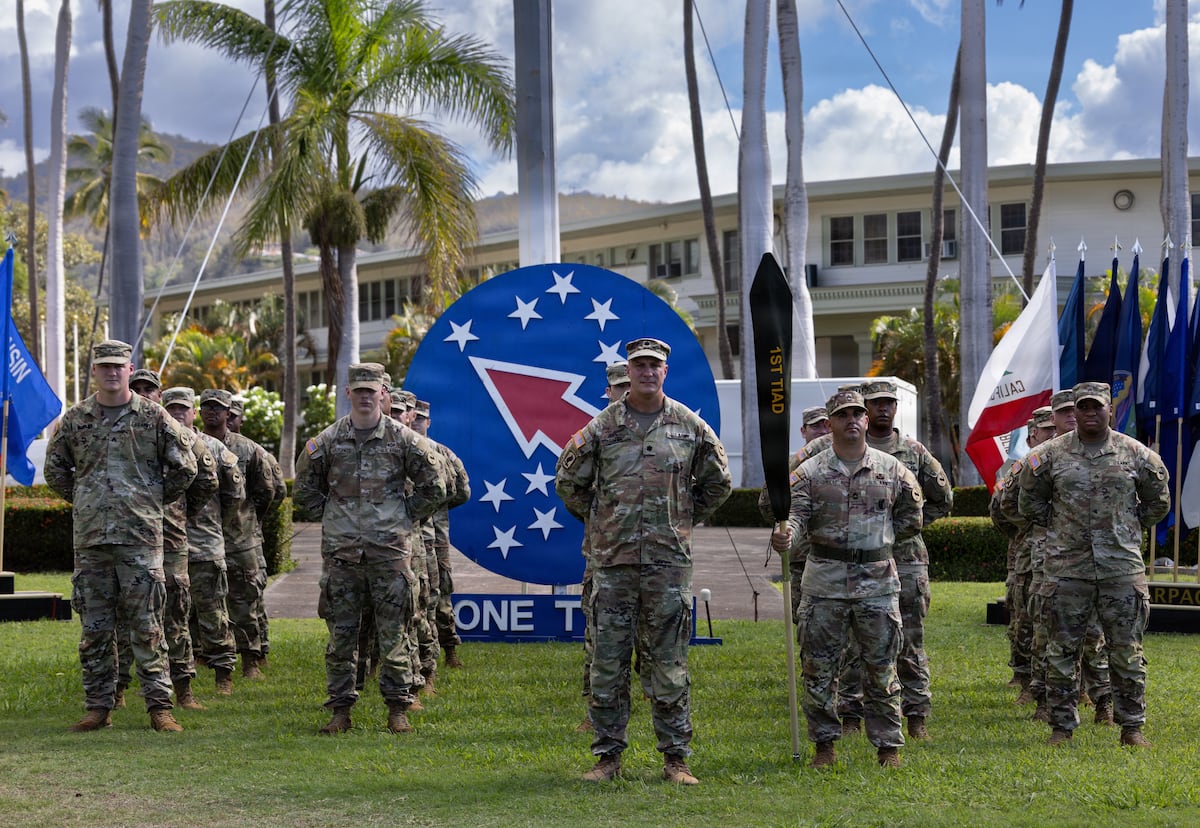
The U.S. Army has launched a new unit designed to address what it terms “malign influence” in the Indo-Pacific region. Officially activated on November 7, 2023, the 1st Theater Information Advantage Detachment (1st TIAD) is headquartered at Fort Shafter, Hawaii, and reports directly to the commander of U.S. Army Pacific.
This new unit aims to establish a strategic advantage by enhancing information operations within the conventional battlespace. According to an Army fact sheet, its mission focuses on disrupting harmful influences, fostering cooperation with allied partners, and promoting stability in the region. The 1st TIAD will cover a vast area that includes 36 countries across northeast, southeast, and south Asia, as well as Oceania.
The unit is comprised of 65 soldiers who bring together a diverse array of expertise, including military intelligence, psychological operations, and cyber operations. This interdisciplinary approach is designed to create dedicated teams capable of addressing complex information warfare scenarios.
Command Sgt. Maj. Avery Bennett, the senior enlisted adviser for the unit, noted the potential for expansion, stating, “There is talk… for growth.” The 1st TIAD serves as the first of three such detachments, with the second unit expected to activate at Fort Gordon, Georgia, in the spring of 2026 and the third at Wiesbaden, Germany, in the fall.
This initiative represents a significant evolution in military strategy, particularly regarding information operations. Anthony Vinci, an adjunct senior fellow at the Center for a New American Security, emphasized the importance of integrating information warfare into conventional military strategies. He noted that this change indicates a shift toward addressing information operations on a larger scale, highlighting that conventional forces must now be more cognizant of issues that could impact large populations.
The specific operational details of the 1st TIAD remain undisclosed. Nevertheless, Vinci indicated that the unit could play a crucial role in countering adversarial information campaigns, particularly those aimed at undermining U.S. interests in the Indo-Pacific. He explained that such campaigns might seek to diminish local support for American involvement and could potentially shift allegiances towards nations like China.
This activation aligns with broader U.S. military objectives to maintain a free and open Indo-Pacific, responding to increasing geopolitical challenges in the region. The establishment of the 1st TIAD reflects a proactive stance by the U.S. Army in navigating the complexities of modern warfare, where information dominance is becoming increasingly vital to achieving strategic goals.

Sarasota County Acquires 3.59 Acres from WCIND – Urgent Update

Amazon Driver Caught Stealing Cat from Lakewood Family Home

Urgent Alert: CIOs Face Rare Earth Supply Risks Amid China Deal

Community Remembers Gail K. Wold, 87, for Her Lifelong Contributions

Trump Faces Backlash for Response to Rob Reiner’s Murder

Ancient Pottery Reveals Early Mathematical Concepts in Art

Celebrini Shines as Sharks Secure 6-3 Victory Over Flames

Coventry Restaurant Fined for Salmonella Outbreak in 2024

Asian Markets React as Trump Blocks Venezuelan Oil Tankers

University of Hawaiʻi Leads $25M AI Project to Monitor Natural Disasters

Interstellar Object 3I/ATLAS Emits Unique Metal Alloy, Says Scientist

Send Holiday Parcels for £1.99 with New Comparison Service

Researchers Achieve Fastest Genome Sequencing in Under Four Hours

Iconic Sand Dollar Social Club Listed for $3 Million in Folly Beach

Afghan Refugee Detained by ICE After Asylum Hearing in New York

McEwen Inc. Secures Tartan Lake Gold Mine Through Acquisition

Peptilogics Secures $78 Million to Combat Prosthetic Joint Infections

Mars Observed: Detailed Imaging Reveals Dust Avalanche Dynamics
-
Science1 month ago
University of Hawaiʻi Leads $25M AI Project to Monitor Natural Disasters
-
 Science2 months ago
Interstellar Object 3I/ATLAS Emits Unique Metal Alloy, Says Scientist
-
 Lifestyle1 week ago
Send Holiday Parcels for £1.99 with New Comparison Service
-
 Science2 months ago
Researchers Achieve Fastest Genome Sequencing in Under Four Hours
-
 Business2 months ago
Iconic Sand Dollar Social Club Listed for $3 Million in Folly Beach
-
 Politics2 months ago
Afghan Refugee Detained by ICE After Asylum Hearing in New York
-
 Business2 months ago
McEwen Inc. Secures Tartan Lake Gold Mine Through Acquisition
-
 Health2 months ago
Peptilogics Secures $78 Million to Combat Prosthetic Joint Infections
-
 Science2 months ago
Mars Observed: Detailed Imaging Reveals Dust Avalanche Dynamics
-

 Lifestyle2 months ago
Jump for Good: San Clemente Pier Fundraiser Allows Legal Leaps
-

 Health2 months ago
Researcher Uncovers Zika Virus Pathway to Placenta Using Nanotubes
-

 Entertainment2 months ago
Jennifer Lopez Addresses A-Rod Split in Candid Interview