
World
Woman Fights DMV Over Revoked License Plate, Claims Name Misunderstood

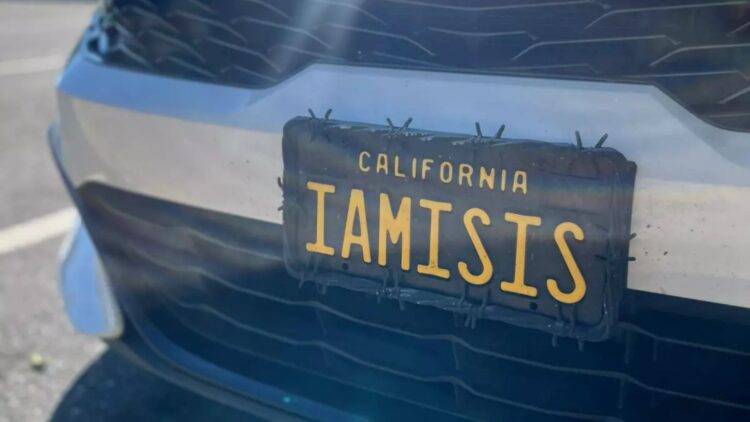
A woman in Sacramento, California, is appealing the decision of the California Department of Motor Vehicles (DMV) to revoke her personalized license plate. The plate, which reads “IAMISIS,” was deemed offensive by the DMV, prompting Isis Wharton to contest the ruling. Wharton has held the plate since 2022, paying an annual fee of $50 for the privilege.
The DMV’s reasoning centers on the claim that the plate could be interpreted as a reference to the terrorist organization known as the Islamic State of Iraq and Syria. According to Wharton, the name “Isis” originates from the ancient Egyptian goddess associated with healing and maternal love. In her view, this connection should not be conflated with violent connotations. “At first, when I opened the letter, I was very surprised that they were doing this after so many years,” she told The Times. “I felt hurt and offended by them, which implies that my name was something that would incite violence.”
DMV’s Policy on License Plates
The California DMV maintains strict guidelines for personalized license plates. These regulations aim to prevent the issuance of plates that may be considered offensive, including terms with sexual or scatological meanings, profane language, or messages that could incite violence. The DMV stated, “The DMV understands that language and symbols can have different meanings across cultures and communities. What may be a term of affection in one context can be perceived differently in another.”
Wharton’s case highlights the nuanced nature of these policies. The DMV can reject license plates that imply violent associations or misrepresent affiliations with governmental entities. As such, the agency’s position is that “IAMISIS” could be interpreted in a negative light, potentially inciting violence.
Previous Controversies and Legal Precedents
Wharton is not alone in her struggle. In 2020, the DMV faced backlash when it rejected personalized plates from five California residents. The complaints, directed to Steve Gordon, the DMV director, claimed that the agency’s actions imposed unconstitutional speech restrictions under the First Amendment. The controversial plates included terms like “OGWOOLF,” deemed to reference a band, and “SLAAYRR,” which the DMV argued could be seen as threatening or aggressive.
Legal challenges have emerged from these disputes, with courts previously ruling in favor of drivers whose plates were protected as private speech. Wharton hopes to leverage this precedent in her fight. “That’s why I choose to fight because I believe this could be a great example of bringing back the powerful and peaceful name Isis and not giving all the negative power to the terrorist group,” she asserted.
The outcome of Wharton’s appeal could have broader implications for how personalized license plates are regulated in California and potentially set a precedent for similar disputes across the United States. As the DMV continues to monitor and manage license plate requests, the balance between freedom of expression and public safety remains a contentious area of debate.

Man Dies in Urgent NE OKC House Fire, Investigation Underway

Urgent: Man Dies in NE OKC House Fire, Crews Respond at 7:30 PM

Indigenous Elders Urgently Teach Hunting Amid Climate Crisis

Fallout Season 2 Premieres with Shocking New Threats, Watch Now

Attleboro High Girls Basketball Triumphs Over Canton, 53-48

California DMV DEMANDS Tesla END ‘Autopilot’ Marketing IMMEDIATELY

Stephen King’s 10 Most Gripping Novellas Revealed: Read Now!

Pentagon Escalates Investigation into Sen. Mark Kelly Amid Clash

Dior and Rizzoli Unveil Lady Art Project Book to Mark 10 Years

University of Hawaiʻi Leads $25M AI Project to Monitor Natural Disasters

Interstellar Object 3I/ATLAS Emits Unique Metal Alloy, Says Scientist

Send Holiday Parcels for £1.99 with New Comparison Service

Researchers Achieve Fastest Genome Sequencing in Under Four Hours

Iconic Sand Dollar Social Club Listed for $3 Million in Folly Beach

Afghan Refugee Detained by ICE After Asylum Hearing in New York

McEwen Inc. Secures Tartan Lake Gold Mine Through Acquisition

Peptilogics Secures $78 Million to Combat Prosthetic Joint Infections

Mars Observed: Detailed Imaging Reveals Dust Avalanche Dynamics
-
Science1 month ago
University of Hawaiʻi Leads $25M AI Project to Monitor Natural Disasters
-
 Science2 months ago
Interstellar Object 3I/ATLAS Emits Unique Metal Alloy, Says Scientist
-
 Lifestyle1 week ago
Send Holiday Parcels for £1.99 with New Comparison Service
-
 Science2 months ago
Researchers Achieve Fastest Genome Sequencing in Under Four Hours
-
 Business2 months ago
Iconic Sand Dollar Social Club Listed for $3 Million in Folly Beach
-
 Politics2 months ago
Afghan Refugee Detained by ICE After Asylum Hearing in New York
-
 Business2 months ago
McEwen Inc. Secures Tartan Lake Gold Mine Through Acquisition
-
 Health2 months ago
Peptilogics Secures $78 Million to Combat Prosthetic Joint Infections
-
 Science2 months ago
Mars Observed: Detailed Imaging Reveals Dust Avalanche Dynamics
-

 Lifestyle2 months ago
Jump for Good: San Clemente Pier Fundraiser Allows Legal Leaps
-

 Health2 months ago
Researcher Uncovers Zika Virus Pathway to Placenta Using Nanotubes
-
 Entertainment2 months ago
Jennifer Lopez Addresses A-Rod Split in Candid Interview