
Science
SpaceX’s Satellite Swarm Poses Threat to Hubble Telescope, NASA Warns

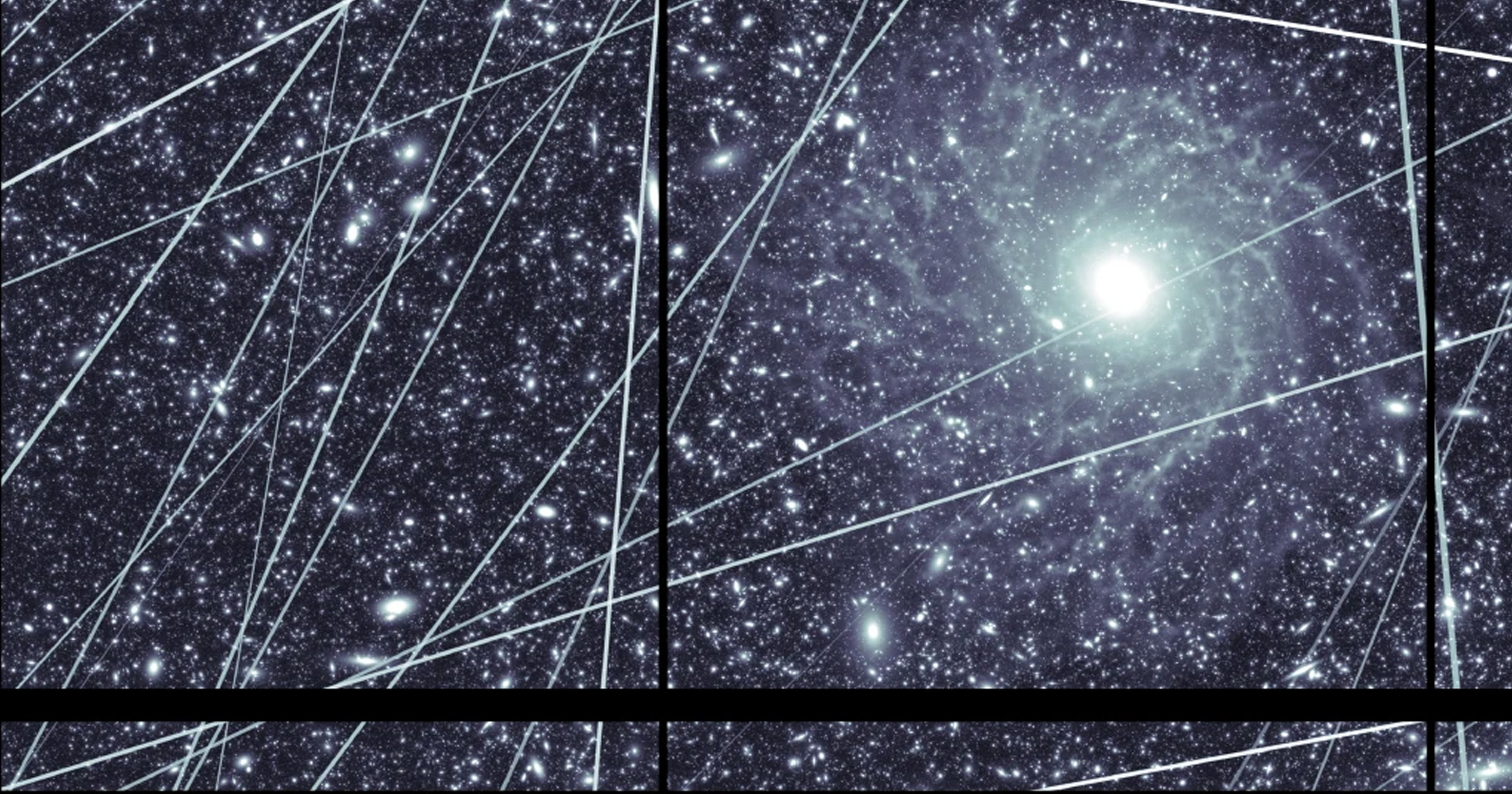
Astronomers are raising alarms about the growing number of satellites in low Earth orbit (LEO), particularly those launched by SpaceX, as these satellites increasingly interfere with astronomical observations. A recent study by NASA researchers highlights that the light pollution and radio emissions from these satellites threaten even the iconic Hubble Space Telescope.
The research, led by Spanish astrophysicist Alejandro Serrano Borlaff, indicates that if planned satellite launches proceed as expected over the next decade, up to one in three Hubble images could be contaminated by light pollution. This finding, reported by El Pais, underscores the escalating concerns surrounding commercial satellite projects.
The U.S. Federal Communications Commission (FCC) has granted SpaceX permission to deploy a staggering 12,000 satellites into LEO, with plans for an additional 30,000 in the coming years. Researchers suggest that the total number of satellites in orbit could swell to as many as 500,000, further complicating the landscape for astronomical research.
“This is the first scientific study whose main objective is to investigate the effects of light pollution on space telescopes, taking into account these plans announced by the industry,” Borlaff explained in his comments to El Pais. The implications of this study extend beyond Hubble; future telescopes may face even greater challenges. For instance, the European Space Agency’s ARRAKIHS is projected to experience bright streaks of light in as much as 96 percent of its images, with its launch targeted for the 2030s.
NASA’s recently launched SPHEREx mission may encounter an even graver situation, with predictions indicating that over 99 percent of its images could be affected by light pollution. The potential for such widespread interference raises critical questions about the future of astronomical research and the preservation of the night sky.
The urgency of addressing these concerns cannot be overstated. Mitigation efforts will require international collaboration among spacefaring nations to regulate commercial activities in LEO effectively. However, the current lack of commitment from countries like the United States poses significant challenges to achieving meaningful change.
As the number of satellites continues to rise, the astronomical community finds itself at a crossroads. The balance between commercial interests and scientific integrity must be carefully navigated to ensure that future generations can continue to explore the cosmos without the looming shadow of light pollution.

Theater for the New City Launches 2026 Season with Lehrman Operas

Scientists Discover Gene Linked to Aging and Food Detection Loss

Denise Antunes da Silva Named Fellow of the American Ceramic Society

Pope Leo XIV Appoints Ronald Hicks as New Archbishop of New York

UK Lawmakers Receive Detailed Worst-Case Climate Scenarios

LIV Golf Team Championship Set for Return to Michigan in 2026

Clinton’s Shocking Request: Epstein and Maxwell at Royal Wedding

Urgent: New York City Reports Nearly 14,000 Flu Cases in December

Yankees Eye Trade for Jazz Chisholm Jr. to Land $100M Star

Send Holiday Parcels for £1.99 with New Comparison Service

University of Hawaiʻi Leads $25M AI Project to Monitor Natural Disasters

Interstellar Object 3I/ATLAS Emits Unique Metal Alloy, Says Scientist

Researchers Achieve Fastest Genome Sequencing in Under Four Hours

Iconic Sand Dollar Social Club Listed for $3 Million in Folly Beach

Afghan Refugee Detained by ICE After Asylum Hearing in New York

McEwen Inc. Secures Tartan Lake Gold Mine Through Acquisition

Peptilogics Secures $78 Million to Combat Prosthetic Joint Infections

Jump for Good: San Clemente Pier Fundraiser Allows Legal Leaps
-
 Lifestyle1 week ago
Send Holiday Parcels for £1.99 with New Comparison Service
-
Science2 months ago
University of Hawaiʻi Leads $25M AI Project to Monitor Natural Disasters
-
 Science2 months ago
Interstellar Object 3I/ATLAS Emits Unique Metal Alloy, Says Scientist
-
 Science2 months ago
Researchers Achieve Fastest Genome Sequencing in Under Four Hours
-
 Business2 months ago
Iconic Sand Dollar Social Club Listed for $3 Million in Folly Beach
-
 Politics2 months ago
Afghan Refugee Detained by ICE After Asylum Hearing in New York
-
 Business2 months ago
McEwen Inc. Secures Tartan Lake Gold Mine Through Acquisition
-
 Health2 months ago
Peptilogics Secures $78 Million to Combat Prosthetic Joint Infections
-
 Lifestyle2 months ago
Jump for Good: San Clemente Pier Fundraiser Allows Legal Leaps
-
 Science2 months ago
Mars Observed: Detailed Imaging Reveals Dust Avalanche Dynamics
-

 Health2 months ago
Researcher Uncovers Zika Virus Pathway to Placenta Using Nanotubes
-

 Entertainment2 months ago
Jennifer Lopez Addresses A-Rod Split in Candid Interview