
World
Boeing 787-9 Outshines Airbus A330-900 in Long-Haul Range

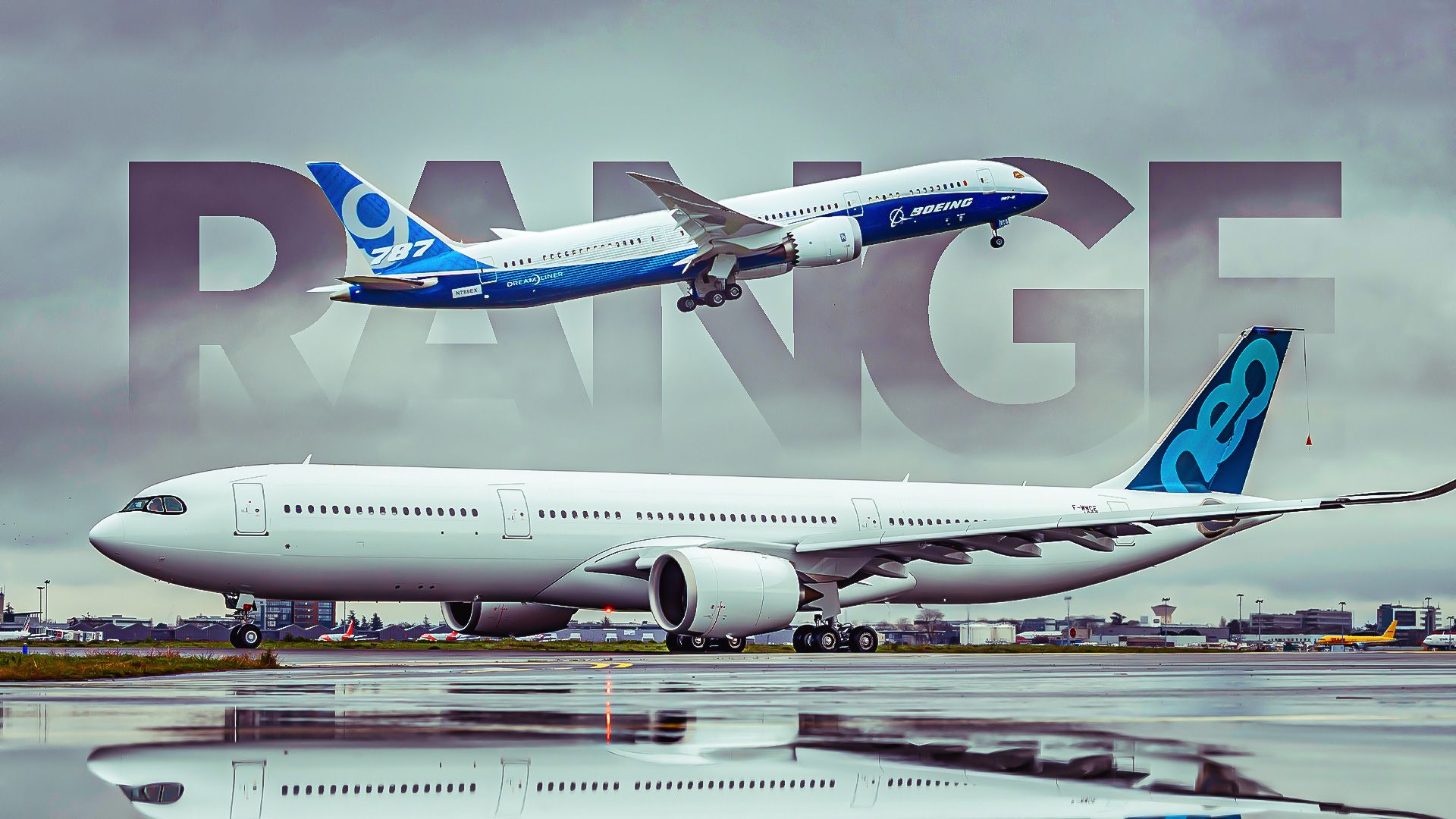
The Boeing 787-9 demonstrates a superior long-haul range compared to the Airbus A330-900, making it a preferred choice among airlines for ultra-long-distance routes. The 787-9 boasts a maximum range of 8,705 miles (14,010 kilometers), while the A330-900 can reach up to 8,438 miles (13,611 kilometers). This difference of 267 miles highlights the 787-9’s capabilities in serving some of the world’s longest non-stop flights.
Airlines are increasingly relying on the 787-9 for long-haul operations. Qantas, for instance, utilizes this aircraft on its flagship non-stop service between Perth Airport (PER) and London Heathrow Airport (LHR), a route that commenced in March 2018. This flight marked the first regular non-stop passenger connection between Australia and the UK. Qantas has tailored its onboard service to enhance comfort during these ultra-long-haul flights, focusing on meal timing, cabin humidity, and lighting designed to mitigate jet lag.
The Airbus A330-900, while slightly behind in range, has carved out its own niche in the long-haul market. Delta Air Lines operates the longest current route with the A330-900, flying 6,074 miles non-stop from Seattle-Tacoma International Airport (SEA) to Taipei Taoyuan International Airport (TPE). The A330-900 is recognized for its fuel efficiency and versatility, making it popular among airlines seeking to balance cost and performance.
The 787-9: A Leader in Long-Haul Travel
The Boeing 787-9 is widely regarded as a game-changer in the aviation industry, offering a blend of long-range capabilities and fuel efficiency. Developed from Boeing’s early 2000s initiative to create a next-generation twinjet, the 787-9 features advanced composite materials and state-of-the-art aerodynamics.
Since its maiden flight in September 2013, the 787-9 has been celebrated for its operational efficiency, reducing fuel burn by approximately 20% compared to similar-sized previous-generation aircraft. Major airlines, including All Nippon Airways, have integrated the 787-9 into their fleets, recognizing its ability to operate long-haul flights while maintaining strong economic performance.
Typically configured to seat between 250-300 passengers, the 787-9 has been instrumental in allowing airlines to adjust their capacity without sacrificing range. This versatility has made it the best-selling variant of the 787 family, with demand from airlines keen to modernize their long-haul fleets.
Airbus A330-900: A Modern Contender
The Airbus A330-900 has quickly established itself as a significant player in the widebody segment. Launched as part of the A330neo (New Engine Option) program, the A330-900 incorporates technology derived from the Airbus A350, resulting in enhanced fuel efficiency and comfort.
First taking to the skies in October 2017, the A330-900 was designed to meet the rising demand for efficient widebody aircraft. It is powered by Rolls-Royce Trent 7000 engines and features a high-aspect-ratio wing design that improves aerodynamics. The aircraft’s cabin includes Airbus’ Airspace interior, which enhances passenger comfort through larger overhead lockers and adjustable lighting.
With a typical seating capacity ranging from 260-300 passengers, the A330-900 is well-suited for a variety of long-haul routes. Airlines like TAP Air Portugal, which became the launch customer in December 2018, have capitalized on its operational flexibility, deploying it on key international routes.
The A330-900’s economic advantages and reliability have attracted a diverse array of operators, from full-service carriers to low-cost airlines. Its ability to serve long-haul markets without the higher costs associated with larger jets has made it a preferred option for many airlines seeking to enhance their fleets.
In the competitive landscape of long-haul aviation, both the Boeing 787-9 and Airbus A330-900 continue to shape airline operations globally. As airlines strive to optimize their networks, these aircraft represent two distinct yet highly effective approaches to long-distance travel, catering to the evolving demands of passengers.

Urgent Tax Savings Alert: Maximize Deductions Before April 15

Trump’s Administration Faces Uncertainty Over Government Shutdowns

Cosmic Defects: The Mystery of the Universe’s Missing Anomalies

Rapid City Parks Department Opens Registration for Bocce Leagues

Samsung Galaxy Watch 9 to Feature Larger 435mAh Battery Soon

Two Dead After Student Boats Capsize Off Okinawa Coast

Healthy Choice Wellness Reports Earnings with Mixed Results

Prince Harry Positions Himself as Royal Family’s Image Reviver

All Points North Lodge Achieves FSPHP-ETA Accreditation

Send Holiday Parcels for £1.99 with New Comparison Service

University of Hawaiʻi Leads $25M AI Project to Monitor Natural Disasters

Maui County Reopens Upgraded Lānaʻi Fifth Street Courts Today!

Daily Codeword Puzzle Launches on October 21, 2025

Congresswoman Under Fire for Misleading Epstein Donation Claims

Interstellar Object 3I/ATLAS Emits Unique Metal Alloy, Says Scientist

Trump Vows to Resolve Afghanistan-Pakistan Crisis “Very Quickly”

Charles Darwin’s Address Book Reveals Hidden Aspects of His Life

Rediscovering Chrysler: 5 Overlooked Models from the 1980s
-
 Lifestyle8 months ago
Send Holiday Parcels for £1.99 with New Comparison Service
-
Science9 months ago
University of Hawaiʻi Leads $25M AI Project to Monitor Natural Disasters
-
 Top Stories8 months ago
Maui County Reopens Upgraded Lānaʻi Fifth Street Courts Today!
-
 Entertainment10 months ago
Daily Codeword Puzzle Launches on October 21, 2025
-
 Lifestyle9 months ago
Congresswoman Under Fire for Misleading Epstein Donation Claims
-
 Science10 months ago
Interstellar Object 3I/ATLAS Emits Unique Metal Alloy, Says Scientist
-
 Top Stories9 months ago
Trump Vows to Resolve Afghanistan-Pakistan Crisis “Very Quickly”
-
 Science8 months ago
Charles Darwin’s Address Book Reveals Hidden Aspects of His Life
-
 Lifestyle8 months ago
Rediscovering Chrysler: 5 Overlooked Models from the 1980s
-

 Science7 months ago
Understanding Generation Z: Strategies for Engaging the Workforce
-

 Entertainment10 months ago
Kelly McCreary Discusses Future of Maggie and Winston in Grey’s Anatomy
-

 Top Stories8 months ago
aespa Faces Backlash Over G-Dragon Interaction at 2025 MAMAs