
World
U.S. Designates Maduro’s Tied Organization as Terror Group

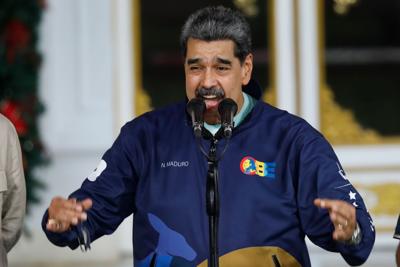
The United States has officially designated the Cartel de los Soles as a foreign terrorist organization, intensifying its pressure on Venezuelan President Nicolás Maduro. This designation, published on July 7, 2020, represents a significant escalation in the Trump administration’s efforts to combat drug trafficking into the U.S. Secretary of State Marco Rubio previously asserted that the Cartel de los Soles is “responsible for terrorist violence” across the Western Hemisphere.
The move occurs amid ongoing discussions within the Trump administration regarding potential military actions against Venezuela, although the President has also considered the possibility of talks with Maduro. Recent military operations in the Caribbean, including strikes against vessels accused of drug trafficking, have reportedly resulted in the deaths of more than 80 individuals.
The term Cartel de los Soles has been used in Venezuela since the 1990s to describe high-ranking military officials who have profited from drug trafficking. Over the years, this term has broadened to encompass police and government officials involved in various illicit activities, including illegal mining and fuel smuggling. The “suns” referenced in the name relate to the insignia worn by senior military officers.
In 2020, the U.S. Justice Department escalated its stance, indicting Maduro and several key aides on charges of narcoterrorism and other offenses, thus framing the Cartel de los Soles as a drug-trafficking organization led by Maduro. Adam Isaacson, director for defense oversight at the Washington Office on Latin America, noted, “It is not a group… They don’t have regular meetings. They don’t have a hierarchy.” This characterization has raised questions about the actual structure and operations of the alleged organization.
Maduro’s administration has vehemently denied the existence of the Cartel de los Soles, calling the U.S. accusations a “ridiculous fabrication” aimed at justifying intervention in Venezuela. Previously, the designation of foreign terrorist organizations was limited to groups like Islamic State and al-Qaida, but the Trump administration has expanded this category to include eight Latin American criminal organizations involved in drug trafficking and other illicit activities.
The administration has frequently claimed that these designated groups are responsible for the maritime activities targeted by U.S. military operations, yet it has not identified specific organizations nor provided substantial evidence. The stated goal of these strikes is to prevent narcotics from reaching American cities, though many, including Maduro, interpret these military actions as a direct challenge to his government, which has maintained power for 26 years.
As U.S. military presence in the Caribbean has increased, Venezuela’s political opposition has renewed its efforts to oust Maduro, further complicating the situation. Maduro remains in office following a controversial election in which he was declared the winner despite significant evidence suggesting he lost to the opposition candidate by a margin exceeding two-to-one.
U.S. Defense Secretary Pete Hegseth indicated that the designation of the Cartel de los Soles opens up “whole bunch of new options” for the U.S. in dealing with Maduro, although he did not elaborate on what these options might entail. Hegseth emphasized that while military action is a possibility, nothing is currently confirmed.
Trump administration officials remain skeptical about the possibility of an acceptable outcome with Maduro in power. As discussions around military and non-military options continue, there is a prevailing belief within the administration that Maduro’s governance is “not sustainable.” Intelligence reports suggest that Maduro and his inner circle are increasingly anxious as U.S. military operations persist.
The U.S. indictment from 2020 accused Maduro, along with Interior Minister Diosdado Cabello and Defense Minister Vladimir Padrino López, of conspiring with Colombian guerrilla groups to flood the U.S. with cocaine, using drug trafficking as a weapon against America. Colombia, recognized as the world’s leading cocaine producer, has seen its illegal trade operations intertwined with Venezuelan security forces, particularly before the Revolutionary Armed Forces of Colombia (FARC) disarmed in 2016.
Maduro has consistently rejected these allegations, arguing that the U.S. is perpetuating a false narrative of drug trafficking to justify intervention. He and other officials have cited a United Nations report indicating that traffickers attempt to move only 5% of Colombia’s cocaine through Venezuela.
In July, the U.S. Treasury Department imposed sanctions on the Cartel de los Soles, accusing Maduro and his associates of leveraging state power to aid in narcotics trafficking. The U.S. also claimed that Maduro’s cartel has provided material support to the Tren de Aragua gang and the Sinaloa cartel, both of which were designated as foreign terror organizations earlier in the year.
As these developments unfold, the international community watches closely, aware that the implications of U.S. actions could significantly impact the political landscape in Venezuela and the broader region.

Urgent Search for Driver Who Sideswiped School Bus in Phillipsburg

Theater for the New City Launches 2026 Season with Lehrman Operas

Scientists Discover Gene Linked to Aging and Food Detection Loss

Denise Antunes da Silva Named Fellow of the American Ceramic Society

Pope Leo XIV Appoints Ronald Hicks as New Archbishop of New York

UK Lawmakers Receive Detailed Worst-Case Climate Scenarios

LIV Golf Team Championship Set for Return to Michigan in 2026

Clinton’s Shocking Request: Epstein and Maxwell at Royal Wedding

Urgent: New York City Reports Nearly 14,000 Flu Cases in December

Send Holiday Parcels for £1.99 with New Comparison Service

University of Hawaiʻi Leads $25M AI Project to Monitor Natural Disasters

Interstellar Object 3I/ATLAS Emits Unique Metal Alloy, Says Scientist

Researchers Achieve Fastest Genome Sequencing in Under Four Hours

Iconic Sand Dollar Social Club Listed for $3 Million in Folly Beach

Afghan Refugee Detained by ICE After Asylum Hearing in New York

McEwen Inc. Secures Tartan Lake Gold Mine Through Acquisition

Peptilogics Secures $78 Million to Combat Prosthetic Joint Infections

Jump for Good: San Clemente Pier Fundraiser Allows Legal Leaps
-
 Lifestyle1 week ago
Send Holiday Parcels for £1.99 with New Comparison Service
-
Science2 months ago
University of Hawaiʻi Leads $25M AI Project to Monitor Natural Disasters
-
 Science2 months ago
Interstellar Object 3I/ATLAS Emits Unique Metal Alloy, Says Scientist
-
 Science2 months ago
Researchers Achieve Fastest Genome Sequencing in Under Four Hours
-
 Business2 months ago
Iconic Sand Dollar Social Club Listed for $3 Million in Folly Beach
-
 Politics2 months ago
Afghan Refugee Detained by ICE After Asylum Hearing in New York
-
 Business2 months ago
McEwen Inc. Secures Tartan Lake Gold Mine Through Acquisition
-
 Health2 months ago
Peptilogics Secures $78 Million to Combat Prosthetic Joint Infections
-
 Lifestyle2 months ago
Jump for Good: San Clemente Pier Fundraiser Allows Legal Leaps
-

 Science2 months ago
Mars Observed: Detailed Imaging Reveals Dust Avalanche Dynamics
-

 Health2 months ago
Researcher Uncovers Zika Virus Pathway to Placenta Using Nanotubes
-
 Entertainment2 months ago
Jennifer Lopez Addresses A-Rod Split in Candid Interview