
Politics
U.S. and Israel Launch Strikes on Iran; Tehran Responds with Attacks

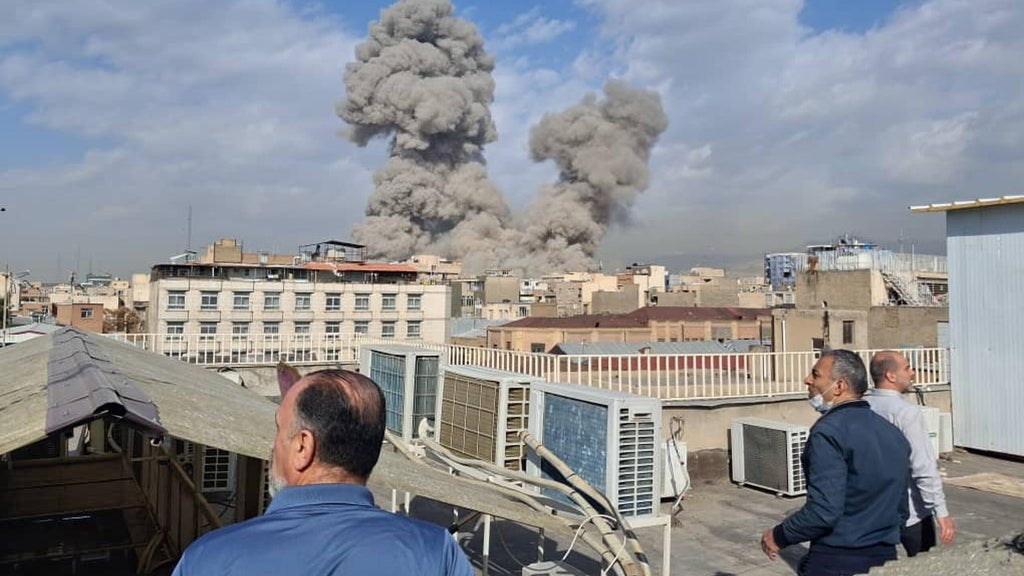
Tensions escalated dramatically as the United States and Israel initiated airstrikes targeting Iranian military positions. In retaliation, Iran launched missile attacks on U.S. military bases located in the Middle East. These developments mark a significant increase in conflict in the region, with implications for international relations and security.
The strikes, confirmed by U.S. military sources on September 5, 2023, come amid allegations that Iran has been providing support to militant groups attacking U.S. interests. President Donald Trump, addressing the media, described the situation as “major combat operations” and reiterated the U.S. commitment to countering Iranian influence.
Iran’s response included several missile strikes aimed at U.S. bases in Iraq and Syria. Reports indicate that the attacks targeted Al-Asad Airbase in Iraq and a base in eastern Syria, both housing U.S. personnel. Initial assessments report minimal casualties among U.S. troops, although local reports suggest significant damage to infrastructure.
Global Reactions and Political Implications
The escalation has drawn sharp reactions from various global leaders. Officials from the European Union and the United Nations have called for immediate de-escalation and dialogue. The potential for a broader conflict raises concerns among nations reliant on stability in the Middle East, particularly regarding oil supply and regional security.
President Trump’s administration has expressed unwavering support for Israel, emphasizing the importance of defending allies against Iranian aggression. Trump stated, “We will not allow Iran to disrupt peace in the region.” His remarks come as U.S. forces remain on high alert in the region, prepared for further developments.
Iranian officials condemned the airstrikes, describing them as acts of aggression. They vowed to retaliate against any further attacks, warning that the U.S. military presence in the region will not go unchallenged. The Iranian Foreign Ministry issued a statement asserting, “We will take all necessary measures to protect our sovereignty.”
Analysis of Military Strategy and Future Prospects
Military analysts suggest that both the U.S. and Israel are employing a strategy aimed at crippling Iran’s military capabilities while minimizing direct confrontation. The airstrikes are part of a broader campaign to deter Iranian support for proxy groups in Iraq and Syria that threaten U.S. interests.
The situation remains fluid, with further military action possible from either side. Analysts warn that continued hostilities could lead to a larger conflict, affecting not only regional players but also drawing in global powers with vested interests in the Middle East.
As events unfold, the international community watches closely, recognizing the grave implications of this conflict for global stability and security. The coming days will be critical in determining whether diplomacy can prevail or if military actions will escalate further.
With both sides poised for potential conflict, the need for dialogue and peaceful resolution becomes increasingly urgent.

Star Trek Leaves Prodigy Characters’ Fate Unresolved in New Series

Experts Stress Heart Health Habits Should Start Early

Local Students Shine at Hart District’s Black History Month Art Show

Addressing Affordable Housing Challenges in the Vail Valley

Rubin Observatory’s Alert System Launches with 800,000 Alerts

Two Killed in Single-Car Crash on Jefferson County Highway

Neil Sedaka, Legendary Songwriter, Dies at 86 in Los Angeles

U.S. and Israel Launch Strikes on Iran; Tehran Responds with Attacks

Heavier Hydrogen Enhances Silicon T Centers for Quantum Networks

Send Holiday Parcels for £1.99 with New Comparison Service

University of Hawaiʻi Leads $25M AI Project to Monitor Natural Disasters

Maui County Reopens Upgraded Lānaʻi Fifth Street Courts Today!

Interstellar Object 3I/ATLAS Emits Unique Metal Alloy, Says Scientist

Kelly McCreary Discusses Future of Maggie and Winston in Grey’s Anatomy

Researchers Achieve Fastest Genome Sequencing in Under Four Hours

Daily Codeword Puzzle Launches on October 21, 2025

Iconic Sand Dollar Social Club Listed for $3 Million in Folly Beach

Afghan Refugee Detained by ICE After Asylum Hearing in New York
-
 Lifestyle3 months ago
Send Holiday Parcels for £1.99 with New Comparison Service
-
Science4 months ago
University of Hawaiʻi Leads $25M AI Project to Monitor Natural Disasters
-
 Top Stories2 months ago
Maui County Reopens Upgraded Lānaʻi Fifth Street Courts Today!
-
 Science4 months ago
Interstellar Object 3I/ATLAS Emits Unique Metal Alloy, Says Scientist
-
 Entertainment4 months ago
Kelly McCreary Discusses Future of Maggie and Winston in Grey’s Anatomy
-
 Science4 months ago
Researchers Achieve Fastest Genome Sequencing in Under Four Hours
-
 Entertainment4 months ago
Daily Codeword Puzzle Launches on October 21, 2025
-
 Business4 months ago
Iconic Sand Dollar Social Club Listed for $3 Million in Folly Beach
-
 Politics5 months ago
Afghan Refugee Detained by ICE After Asylum Hearing in New York
-

 Lifestyle3 months ago
Congresswoman Under Fire for Misleading Epstein Donation Claims
-

 Business5 months ago
McEwen Inc. Secures Tartan Lake Gold Mine Through Acquisition
-

 Health5 months ago
Peptilogics Secures $78 Million to Combat Prosthetic Joint Infections